
End of Year HVAC Decisions: What Carlsbad Homeowners Should Do Before December 31
If I own a home in Carlsbad, I should not wait until late December to deal with HVAC issues. Salt air, moisture, and winter demand can turn a small problem into a system shutdown fast.
Here’s the short version:
- Book heating service now if my furnace or heat pump is noisy, short-cycling, or struggling to keep rooms even.
- Change filters and check vents first, because blocked airflow can push up energy use and wear down the system.
- Use the repair-vs.-replace math: if the repair cost × system age is over $5,000, replacement may make more sense.
- Look at heat pumps closely in Carlsbad, since mild winters often make them a good fit for both heating and cooling.
- Add simple upgrades like a smart thermostat, duct sealing, or a MERV 11–13 filter to cut waste and help indoor air.
- Check tax credits and rebates before booking, because many year-end programs need the system installed by 12/31 for that tax year.
One more thing: if I live near the coast, I should pay extra attention to corrosion, salt buildup, coils, and electrical parts. Those issues can shorten system life and lead to mid-winter repair calls.
| Decision area | What I should do before 12/31 | Why it matters |
|---|---|---|
| Heating maintenance | Schedule a tune-up | Catch wear before winter use goes up |
| Airflow | Replace filters and open registers | Better comfort and lower strain |
| Ducts | Check for leaks or disconnections | Heated air may be lost before it reaches rooms |
| Repair vs. replace | Compare age, repair history, and bills | Helps avoid sinking more money into an old unit |
| Upgrades | Add thermostat, filtration, or duct sealing | Lower waste and better indoor comfort |
| Incentives | Confirm rebate and tax credit rules | Missing the deadline can mean lost savings |
Bottom line: if I want fewer breakdown risks, lower winter bills, and a shot at year-end savings, I need to make HVAC decisions before December 31, not after.
Fix the Most Urgent HVAC Problems Before Winter Sets In
Before winter hits, deal with the HVAC problems most likely to shut your system down. Do it now. Emergency repairs tend to cost more, and once the cold sets in, service calendars fill up fast.
Schedule a Furnace or Heat Pump Tune-Up Before the Holiday Rush
Book a professional tune-up now so a technician can inspect the parts most likely to cause trouble when your system starts working harder. That includes ignition components, blower motors, electrical connections, and the heat exchanger on gas furnaces. You should also ask for a carbon monoxide safety check, since a professional inspection can spot heat exchanger or ignition issues before heavy winter use puts more strain on the system.
If you live near the coast, ask whether corrosion-resistant coatings make sense for your outdoor unit.
Replace Filters, Open Registers, and Check for Duct Problems
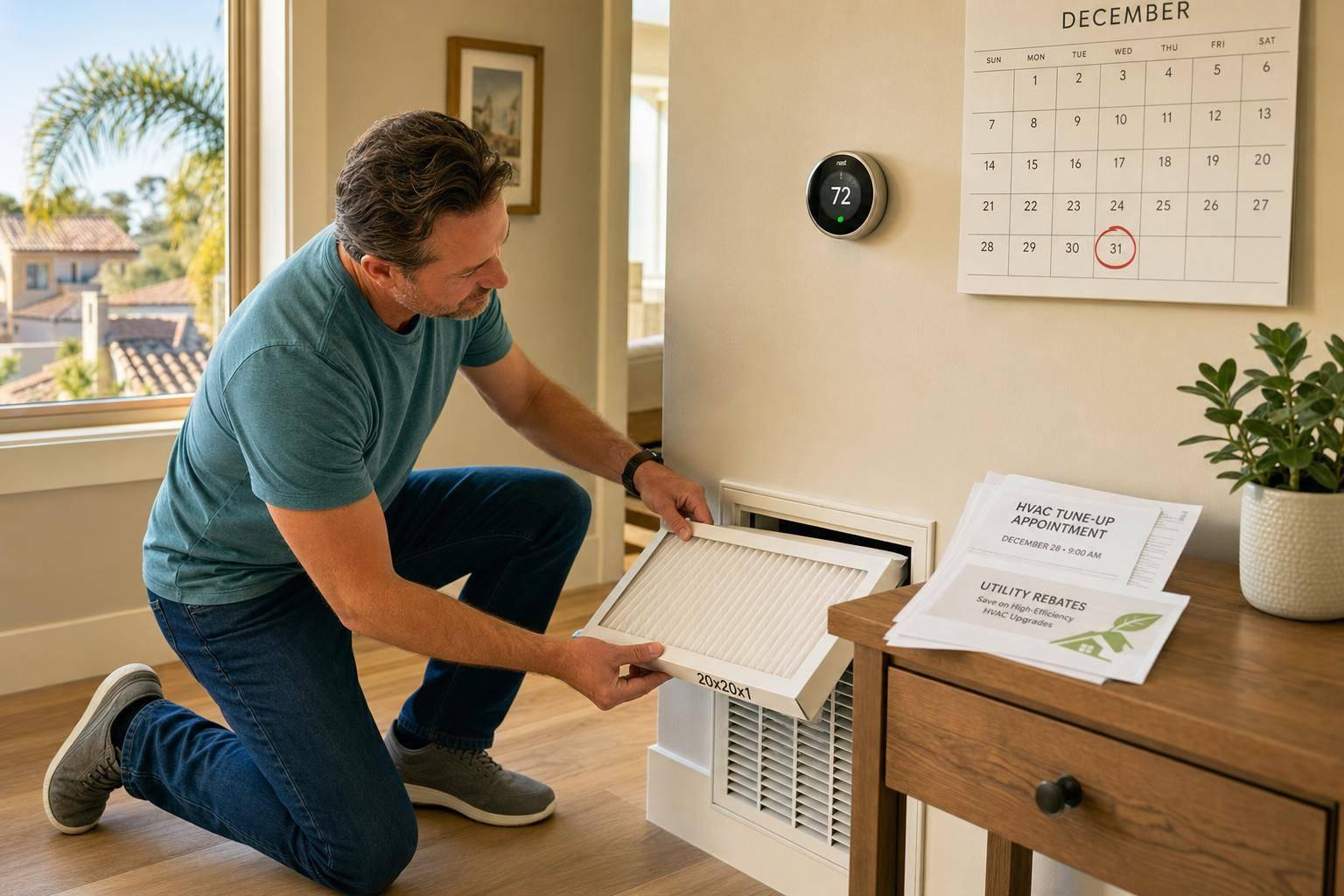
Start with the simple stuff. Replace 1-inch filters every one to three months, check thicker media filters before winter, and make sure supply registers stay open and clear. A closed vent or a couch shoved over a register might not seem like a big deal, but it can throw off airflow through the house.
It also helps to look at any ductwork you can reach in attics or crawl spaces. Check for clear disconnections or visible leaks. When ducts leak, heated air escapes before it ever gets to the rooms you want to warm up.
| Maintenance Problem | Matching Fix | Task Type | Expected Impact |
|---|---|---|---|
| Dirty or clogged filter | Replace 1-inch filter or inspect media filter | Homeowner | Better airflow, lower energy bills |
| Blocked supply registers | Open vents, move furniture or rugs | Homeowner | Balanced temperatures room to room |
| Banging or squealing | Lubricate motors; replace worn belts or parts | Professional | Prevents mid-winter breakdown |
| Musty odors | Clean coils; inspect ducts for mold | Professional | Improved indoor air quality |
| Spiking utility bills | Seal duct leaks; schedule a tune-up | Professional | Lower energy use |
| Carbon monoxide risk | Heat exchanger and safety inspection | Professional | Key for occupant safety |
If these fixes point to heavier wear or weaker system performance, the next step is figuring out whether to repair, replace, or upgrade before December 31.
sbb-itb-a7630c3
Repair, Replace, or Upgrade: How to Decide Before Year End
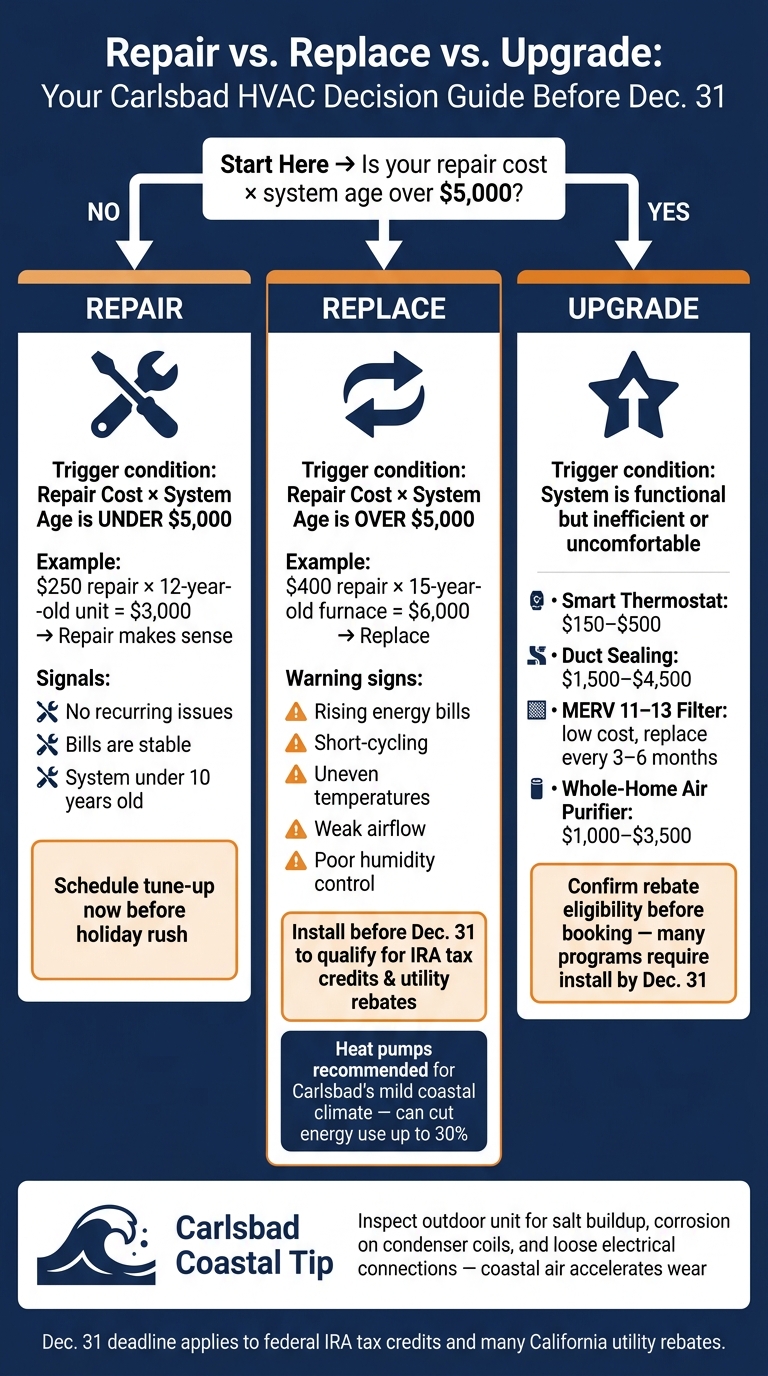
Repair vs. Replace vs. Upgrade: Carlsbad HVAC Decision Guide Before Dec. 31
If a tune-up turns up major wear, don’t look at the repair in isolation. The better call usually comes down to three things: the system’s age, its repair track record, and what your energy bills have been doing.
Use Age, Repair History, and Energy Bills to Guide Your Decision
A simple rule can help you make the call fast. Multiply the repair cost by the system’s age in years. If that number is more than $5,000, replace the system.
Here’s what that looks like in practice: a $400 repair on a 15-year-old furnace comes out to $6,000. That’s a strong sign that putting more money into the unit probably doesn’t make sense.
That number isn’t the only thing to watch, though. Pay attention to warning signs like:
- Higher energy bills even when your usage hasn’t changed
- Uneven temperatures around the house
- Short-cycling
- Weak airflow
- Poor humidity control
Put those signals together with the unit’s age and repair history, and the decision usually gets a lot clearer.
If replacement makes more sense, a heat pump is often a good match for Carlsbad homes.
Why a Heat Pump Upgrade Makes Sense for Carlsbad's Mild Winters
Carlsbad’s mild coastal climate makes heat pumps a strong fit for many homes because they handle both heating and cooling in one system. That’s a big part of the appeal. You’re not dealing with one setup for winter and another for summer.
Modern inverter-driven heat pumps also run differently than older standard units. Instead of switching on and off in stop-start cycles, they adjust compressor speed continuously. That can cut monthly energy use by up to 30% compared with older standard units.
There’s one local factor you can’t ignore: salt air. In Carlsbad, coastal conditions can speed up corrosion on condenser coils and electrical parts. That’s why it makes sense to look for corrosion-resistant coil coatings made for coastal settings.
If your system is more than 10 years old and you’re seeing rising bills, uneven temperatures, or repeat repairs, replacing it before year end can save you a lot of hassle later.
Cut Winter Bills with Thermostat, Duct, and Air Quality Upgrades
If your furnace or heat pump is still doing its job, the fastest year-end wins often come from the parts around it: thermostat control, duct sealing, and filtration. Start with the controls. Then move to duct sealing and better air cleaning.
Install a Smart Thermostat and Set the Right Heating Schedule
A smart thermostat can reduce runtime through scheduling and occupancy control, which can trim heating costs without changing the main system. That’s the big appeal here: you’re not replacing the furnace or heat pump. You’re just making it run with less waste.
Before you buy one, check that it works with your furnace or heat pump. Not every thermostat plays nicely with every HVAC setup, and the wrong match can cause annoying performance issues. Coastal Comfort San Diego can confirm compatibility and install the right model.
Seal Ducts and Improve Filtration Before Winter Air Quality Gets Worse
If some rooms still feel warmer or colder than others after basic maintenance, duct sealing is the next move. Leaky ducts let heated air escape before it reaches the rooms you’re trying to warm, which leads to uneven airflow and higher utility bills. That’s why duct sealing is such a strong year-end upgrade.
For cleaner winter air, move up to a MERV 11–13 filter. It helps trap finer particles and can help protect the coils at the same time. If you want stronger whole-home air cleaning, ask about CARB-certified, ozone-free options like HEPA, UV, or activated carbon systems.
| Upgrade | Maintenance Needs | Expected Benefits |
|---|---|---|
| Smart Thermostat | Software updates; battery checks | Reduced runtime; tighter temperature control |
| Duct Sealing | Inspections every 3–5 years | Even room temperatures; lower bills |
| MERV 11–13 Filters | Replace every 3–6 months | Better filtration; protects HVAC components |
Once you know which upgrades matter most, the next step is checking which incentives still apply before year-end. Before you book, see whether rebates or tax credits can help cut the cost.
How to Use Remaining Rebates, Tax Credits, and Home-Improvement Funds Before December 31
Once you know which upgrade makes sense for your home, the next move is simple: check the deadline tied to the incentive. Dec. 31 is a hard cutoff for many HVAC programs. Federal tax credits under the Inflation Reduction Act and many California utility rebates require the equipment to be fully installed and operational by that date to count for that tax year.
Check Rebate and Tax-Credit Eligibility Before Booking Any Work
Before you book the job, confirm which incentives fit your home and your planned upgrade. The match matters. If you're looking at an air purifier or filtration upgrade, make sure the unit is CARB-certified and ozone-free so it meets California rules.
It also helps to get your paperwork lined up early. Collect the manufacturer certification, AHRI certificate, and final invoice before installation. Those documents are often needed when you file for a tax credit or send in a rebate claim.
Plan Installation Timing and Financing with Coastal Comfort San Diego
Once eligibility is clear, timing becomes the big issue. Lead times, permits, and holiday demand can all push a project past Dec. 31. That’s why it makes sense to schedule consultations and estimates by late October or early November. Waiting too long can turn a tax break into a missed chance.
Coastal Comfort San Diego offers free estimates and 0% APR financing to help homeowners handle the upfront cost of a larger HVAC upgrade. Many high-efficiency systems also come with 10-year parts and compressor warranties.
Here’s a quick look at the cost and incentive ranges that may still fit before Dec. 31:
| Upgrade Type | Approx. Cost Range (USD) | Possible Incentive Category |
|---|---|---|
| High-Efficiency Heat Pump | $8,000 – $19,000 | Federal Tax Credit (IRA) / Utility Rebate |
| Duct Sealing & Repair | $1,500 – $4,500 | Energy Efficiency Rebate |
| Smart Thermostat | $150 – $500 | Local Utility Rebate / Federal Credit |
| Whole-Home Air Purifier | $1,000 – $3,500 | IAQ / Health Incentives |
| Preventative Maintenance | $150 – $300 | Utility Maintenance Rebates |
After installation, ask for a final install report. That report can help support both warranty and rebate claims.
Key HVAC Steps to Complete Before the Year Ends
Use this checklist to turn those earlier choices into action before Dec. 31.
Book service now if your furnace or heat pump is banging, rattling, squealing, or short-cycling. Those sounds usually mean something’s off, and waiting rarely helps.
If repair costs keep stacking up and your utility bills are climbing, compare the repair estimate with the unit’s age before you approve more work. Sometimes one more repair makes sense. Other times, it’s money down the drain. If replacement looks like the better move, handle it before rebates and tax credits expire on Dec. 31.
If replacement isn’t the right call, put your attention on upgrades that cut waste fast. Two quick upgrades can help with comfort and efficiency: a smart thermostat and duct sealing. If indoor air quality has been a problem, replace the air filter and check UV lamps. In Carlsbad, inspect the outdoor unit for salt buildup, corrosion, and loose electrical connections.
Once your work list is set, schedule it before year-end deadlines close. And before any installation goes on the calendar, confirm rebate and tax-credit eligibility so you can make the most of the savings still on the table.
FAQs
How do I know if my HVAC issue is urgent?
Your HVAC issue is urgent if your system won’t heat or cool, has weak airflow, or keeps turning on and off.
You should also call a pro if you notice banging, rattling, or squealing noises, a sudden spike in your energy bill, rooms that feel uneven in temperature, odd odors, or an older system that keeps breaking down and needs costly repairs.
Is a heat pump worth it in Carlsbad?
Yes. Carlsbad’s mild coastal climate makes modern heat pumps a smart fit for both heating and cooling.
They can handle both jobs in one system, all year long. That makes them a strong option for older homes, especially those without existing ductwork.
Homeowners may also qualify for federal tax credits of up to $2,000, which can help offset upfront installation costs.
What documents do I need for HVAC rebates?
Keep detailed service records for every HVAC installation and maintenance visit. Rules vary by program, but good records can help show that the system was installed by a qualified pro and maintained over time. That matters for rebate claims, tax credits, and warranty support.
Before you choose equipment, review your program’s current guidelines to confirm the exact paperwork it asks for. These rules can change from year to year, so it’s smart to check first instead of finding out later that something is missing.