
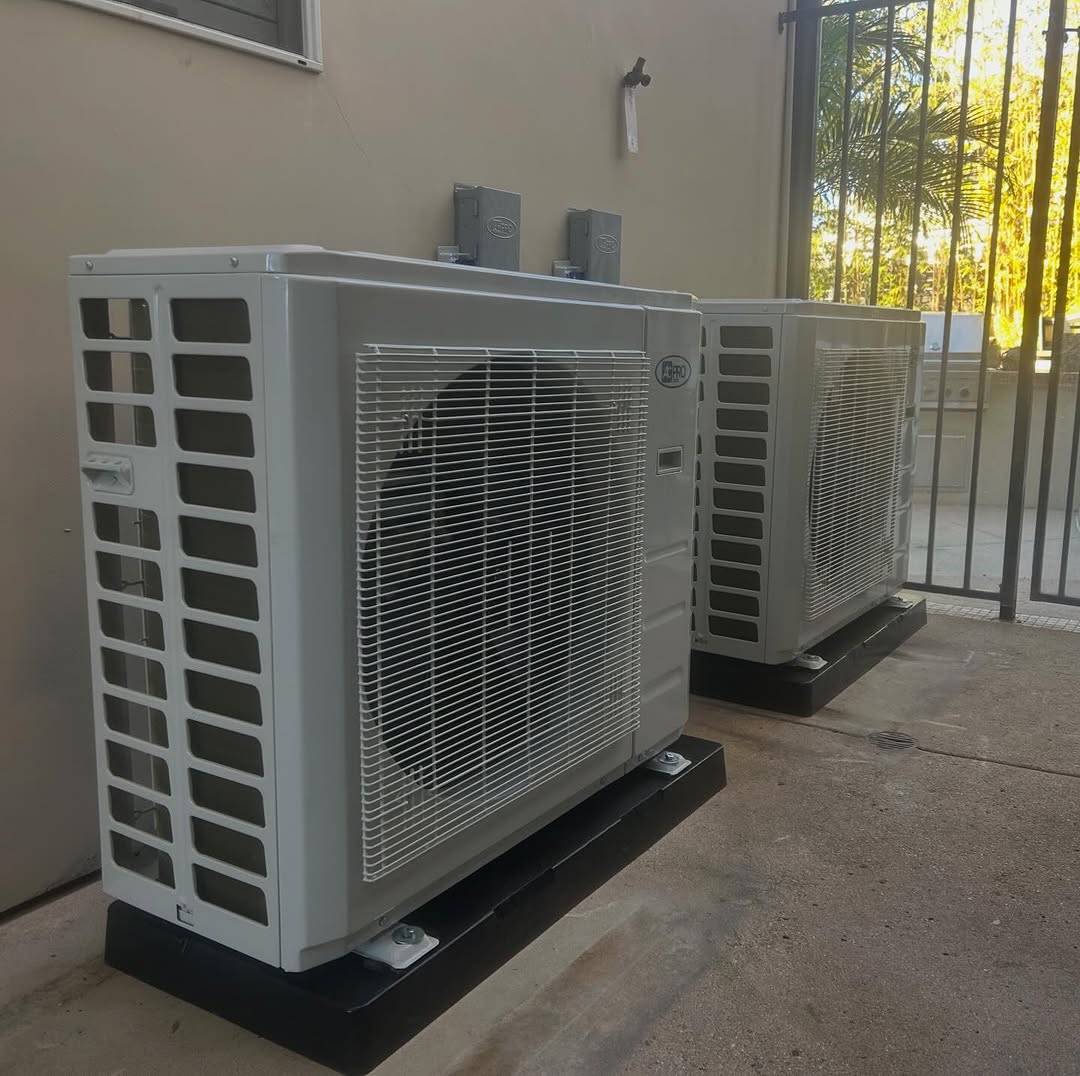
Coastal Comfort San Diego is a family-owned HVAC contractor in Carlsbad. The large HVAC companies in San Diego run on a different model: high service volume, standardized procedures, rotating technicians, and in many cases commission-based sales. Neither model is wrong for every home, but they feel very different once a technician is standing in your hallway. This is an honest look at the differences and what to ask any provider before you sign.
Key differences at a glance:
- Technician consistency: at Coastal Comfort the owner is directly involved in the work; large companies dispatch from a rotating pool.
- Service flexibility: a small company can take on nonstandard setups; large operations tend to follow fixed checklists.
- Pricing: Coastal Comfort gives free estimates for replacements and installs and does not pay commissions; large companies often do.
- Accountability: with an owner-run company, the person who quoted the job is the person responsible for it.
Service Quality and Expertise
How Coastal Comfort Handles Residential Service
Coastal Comfort San Diego was founded by Trever Blanc and is built on more than 30 years of hands-on residential HVAC experience. The company is licensed, bonded, and insured under California contractor license 1149074, and it serves Carlsbad, Oceanside, Encinitas, Cardiff, Vista, San Marcos, Escondido, and the rest of San Diego County.
Direct owner involvement is the main difference. The person who diagnoses the system explains the options, and the recommendation is not tied to a sales quota. The work covers AC and furnace repair and installation, heat pumps, ductless mini splits, add-on air conditioning for furnace-only homes, replacements, maintenance, and indoor air quality, on all major brands.
How Large HVAC Brands Operate
Large HVAC companies prioritize efficiency through standardized processes that let them handle high service volumes. That structure has real advantages, including big fleets and wide availability, but customers usually meet a rotating pool of technicians rather than one point of contact. Complex or unusual jobs may be redirected or declined because they do not fit the checklist, and during peak season scheduling can stretch out.
Service Quality Comparison Table
| Feature | Coastal Comfort | Large HVAC Companies |
|---|---|---|
| Technician consistency | Owner directly involved in the work | Rotating staff based on dispatch volume |
| Credentials | Licensed, bonded, and insured, license 1149074 | Typically licensed, with formal training programs |
| Service flexibility | Takes on nonstandard setups | Tends to follow standardized service checklists |
| Response time | Same-day or next-day appointments when available | Varies, with delays possible in peak season |
| Accountability | The person who quoted the job is responsible for it | Handled through dispatchers and service managers |
Pricing and Value
Coastal Comfort's Pricing Model
San Diego is an expensive market for HVAC work, and a full system replacement can run well into five figures once permits, inspections, and code compliance are added. Coastal Comfort keeps that in check the simple way: free estimates for replacements and new installations, low overhead as a family-owned business, and no commission-based sales staff. Financing options may be available depending on the project, and the estimate visit is the time to ask.
"As a family-owned business, we keep overhead low and don't rely on high-pressure sales or commissions. That means you get quality service without inflated pricing." - Coastal Comfort San Diego
How Large Companies Price Their Services
Big HVAC companies carry higher operating costs, and their technicians often work on commission, which can encourage upselling during a service call. Some bundle solar and HVAC, which makes the price of the equipment itself harder to see. Seasonal demand also moves their pricing; peak months cost more than spring or fall.
Some manufacturers also rely on proprietary parts. Those parts can deliver specific performance benefits, but they tie you to specialized dealers for repairs, which can raise long-term maintenance costs. Ask any contractor whether the system they are quoting uses widely available parts.
Pricing and Value Comparison Table
| Feature | Coastal Comfort | Large HVAC Companies |
|---|---|---|
| Estimate process | Free estimates for replacements and installs | Often paired with a sales presentation |
| Sales model | No commissions, no high-pressure sales | Commission-based sales are common |
| Overhead | Low, family-owned | Higher corporate overhead |
| Financing | May be available depending on the project | Usually through third-party lenders |
| Seasonal pricing | Ask at the estimate | Peak-season premiums are common |
Customer Satisfaction and Reviews
Coastal Comfort's Standing in San Diego
Coastal Comfort holds a 5.0 rating on Google. The reviews keep coming back to the same things: honest communication, a clean job site, same-day help when a system fails, and the owner being personally involved from the first call to the final check. Read them on the company's Google Business Profile before you decide.
What Reviews of Large Companies Tend to Say
Reviews of large HVAC companies are mixed by nature, because the experience depends on which technician shows up. Common complaints in that category are unreturned calls, inconsistent quality between visits, and aggressive sales tactics, most of which trace back to commission-based sales and subcontracted labor.
Whoever you hire, big or small, do the homework. Verify the contractor's license with the California Contractors State License Board, confirm insurance and bond, and ask up front whether the pricing is flat-rate or time-and-materials so a long job does not turn into a surprise bill.
Customer Satisfaction Comparison Table
| Feature | Coastal Comfort | Large HVAC Companies |
|---|---|---|
| Rating | 5.0 on Google | Varies by branch and technician |
| What reviews praise | Owner involvement, honesty, cleanup, same-day response | Brand recognition, large technician fleets |
| What reviews complain about | Read them yourself on Google | Missed callbacks, high-pressure sales, hidden fees |
| Service style | Family-owned, owner-operated | Corporate, sometimes subcontracted labor |
Warranties, Maintenance, and Long-Term Reliability
Coastal Comfort's Approach
Every installation comes with the manufacturer's parts warranty, and the labor coverage is spelled out in the written estimate, so ask for both in writing. Preventative maintenance, seasonal tune-ups, and diagnostics are available on equipment from all major brands, which is what keeps a coastal system alive: coil cleaning and corrosion checks matter more within a few miles of the ocean than anywhere inland.
What Large Companies Offer
Large companies usually run standardized warranty programs and promote membership maintenance plans. Those work well for standard systems. They can fall short on homes with unusual setups, older equipment, or add-on work that does not fit the plan, which is where a smaller company's flexibility earns its keep.
Warranty and Reliability Comparison Table
| Feature | Coastal Comfort | Large HVAC Companies |
|---|---|---|
| Parts warranty | Manufacturer coverage, in writing | Manufacturer coverage, in writing |
| Labor coverage | Spelled out in the estimate | Standardized program terms |
| Maintenance | Tune-ups and diagnostics on all major brands | Membership plans built around standard systems |
| Nonstandard jobs | Handled case by case | May be declined or redirected |
Conclusion: Choosing the Right HVAC Provider
Key Takeaways from This Comparison
The main distinction comes down to personalized service versus standardized process. Large companies bring scale, broad product lines, and brand recognition. A family-owned company brings direct accountability and an owner who knows your system because he worked on it.
Why Coastal Comfort Works for Most San Diego Homeowners
For a coastal home, the things that decide whether a system lasts are the install quality, the maintenance, and whether anyone is paying attention to corrosion. That is where an owner-run company with more than 30 years of hands-on experience, free estimates, and no commission pressure makes sense.
Decision Matrix Table
| Criteria | Coastal Comfort | Large HVAC Companies |
|---|---|---|
| Pricing transparency | Free estimates, no commissions | Corporate markups, commission-based sales |
| Service personalization | Owner-operated, direct accountability | Rotating technicians, dispatcher model |
| Complex job flexibility | Handled case by case | Standardized protocols |
| Product range | Services all major brands | Wide product catalogs, sometimes proprietary parts |
| Fleet size and volume | Smaller team | Larger fleets, higher throughput |
| Best fit | Residential homes across San Diego County | Large commercial accounts |
FAQs
How do I know if my HVAC setup counts as "nonstandard"?
An HVAC system is nonstandard when it deviates from a typical setup. That might mean equipment with uncommon dimensions, custom ductwork, a home with heat but no cooling, an installation that predates current building codes, or a system that has been modified over the years. Older homes and unusual layouts land in this category often.
What should I ask during an in-home HVAC estimate?
A few questions cover most of it:
What size unit is right for my home? The technician should size the system from the house, not from the old nameplate.
What exactly does the estimate cover? System size, efficiency rating, total cost, permits, warranties, and the installation timeline.
Do you offer maintenance plans? Ongoing coverage for repairs, replacements, and routine maintenance saves headaches later.
Those answers tell you whether the proposed system is a good match for the home and whether the price is complete.
What warranty details should I confirm before approving an installation?
Check the coverage duration (for example, a 10-year parts warranty), what is covered (parts, labor, or maintenance), and whether registration is required to activate it. Ask about extra protections like annual maintenance agreements, and get the labor warranty from the contractor in writing, because it is separate from the manufacturer's coverage.