
How Coastal Humidity Affects AC Systems in Carlsbad Homes
If your AC reaches the set temperature but your house still feels sticky, coastal humidity is often the reason. In Carlsbad, moist ocean air can make an AC run longer, leave rooms damp, clog drain lines, and speed up rust on outdoor parts.
Here’s the short version:
- Humidity affects comfort as much as temperature
- An AC has to cool the air and remove moisture
- Oversized systems may cool too fast and shut off too soon
- High indoor moisture can lead to condensation, musty smells, and water near the unit
- Salt air can wear down outdoor metal parts over time
- Common fixes include cleaning, drain-line service, airflow checks, and corrosion inspection
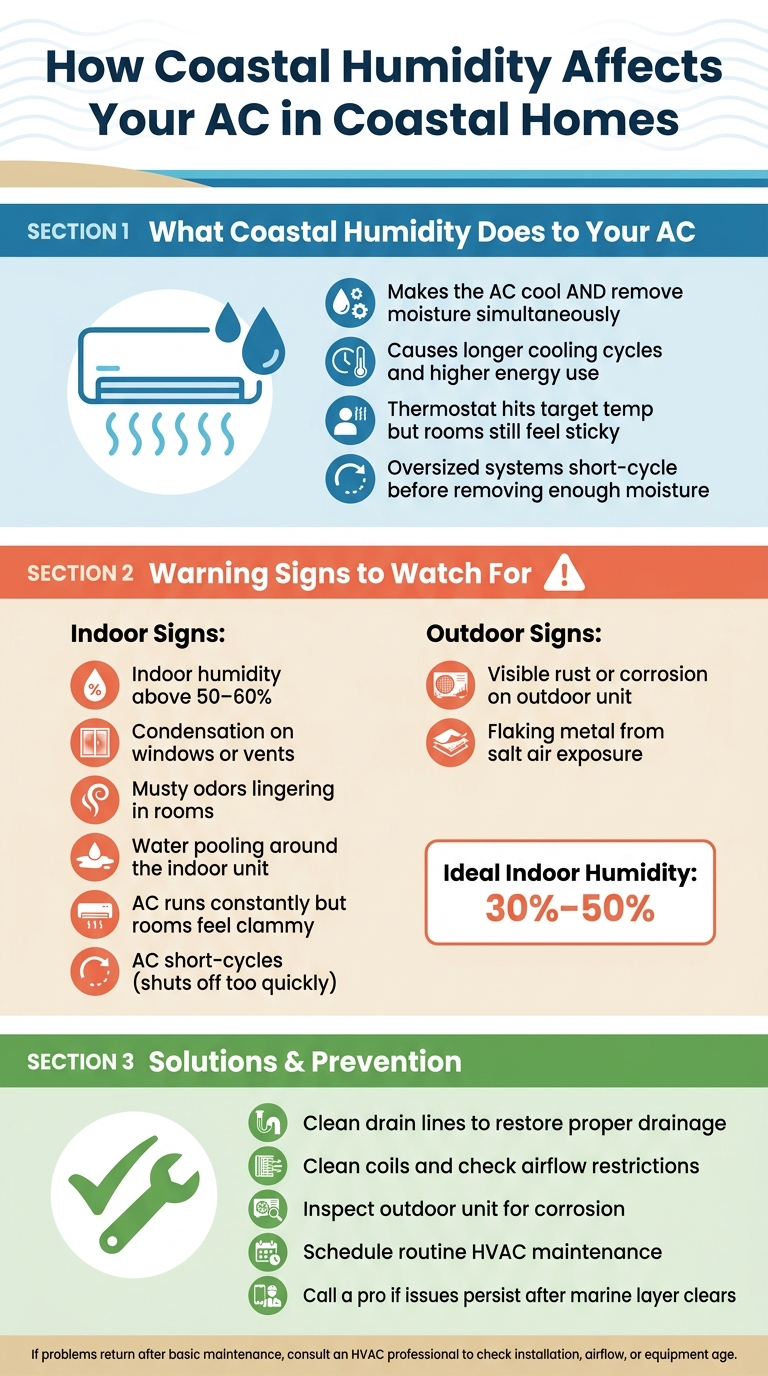
I’d pay close attention if indoor humidity stays above 50% to 60%, if you see water around the system, or if the AC keeps running but rooms still feel damp. For most homes, indoor comfort is usually better when humidity stays near 30% to 50%.
What this comes down to is simple: coastal moisture can hurt comfort, strain the AC, and wear out parts faster if it isn’t dealt with early.
How Coastal Humidity Affects Your AC: Warning Signs & Fixes
How Does Coastal Humidity Affect HVAC Maintenance?
sbb-itb-a7630c3
How coastal humidity affects AC performance
Coastal humidity can make an AC work a lot harder. It’s not just cooling the air. It also has to pull moisture out of it. That extra load usually shows up first as longer cooling cycles.
Longer run times and clammy rooms
When indoor humidity is high, the thermostat may hit the set temperature while the room still feels heavy and sticky. Here’s the catch: the thermostat tracks temperature, not moisture.
That’s why a home can feel uncomfortable even when the number on the thermostat looks fine.
An oversized system can make this worse because it may short-cycle and shut off before it removes enough moisture. But even a properly sized system can have trouble during humid stretches.
The result is longer run times and higher energy use.
Simple ways to spot excess indoor moisture
Most homeowners spot this issue through humidity readings or visible condensation.
A hygrometer or a thermostat humidity reading can show whether indoor moisture is staying too high while the AC keeps running. Condensation on windows or vents is another sign worth watching. If you notice that along with long AC run times, humidity is likely affecting performance.
Moisture-related AC problems inside and outside the system
Once humidity starts hurting comfort, it can also start messing with drainage and metal parts. Extra moisture puts more pressure on the drain system and can wear down parts outside too.
Drainage problems, water around the unit, and musty odors
Your AC pulls moisture out of the air and sends it out through the drain line. When that line clogs or backs up, trouble tends to show up fast.
Common signs include:
- Slow drainage
- Standing water around the indoor unit
- Water stains
- Musty odors
If the system shuts off out of nowhere, the drain safety switch may have tripped. That switch is there to stop water from spilling over and causing more damage.
Outdoor corrosion from coastal air
Moisture problems don't stop at the indoor unit.
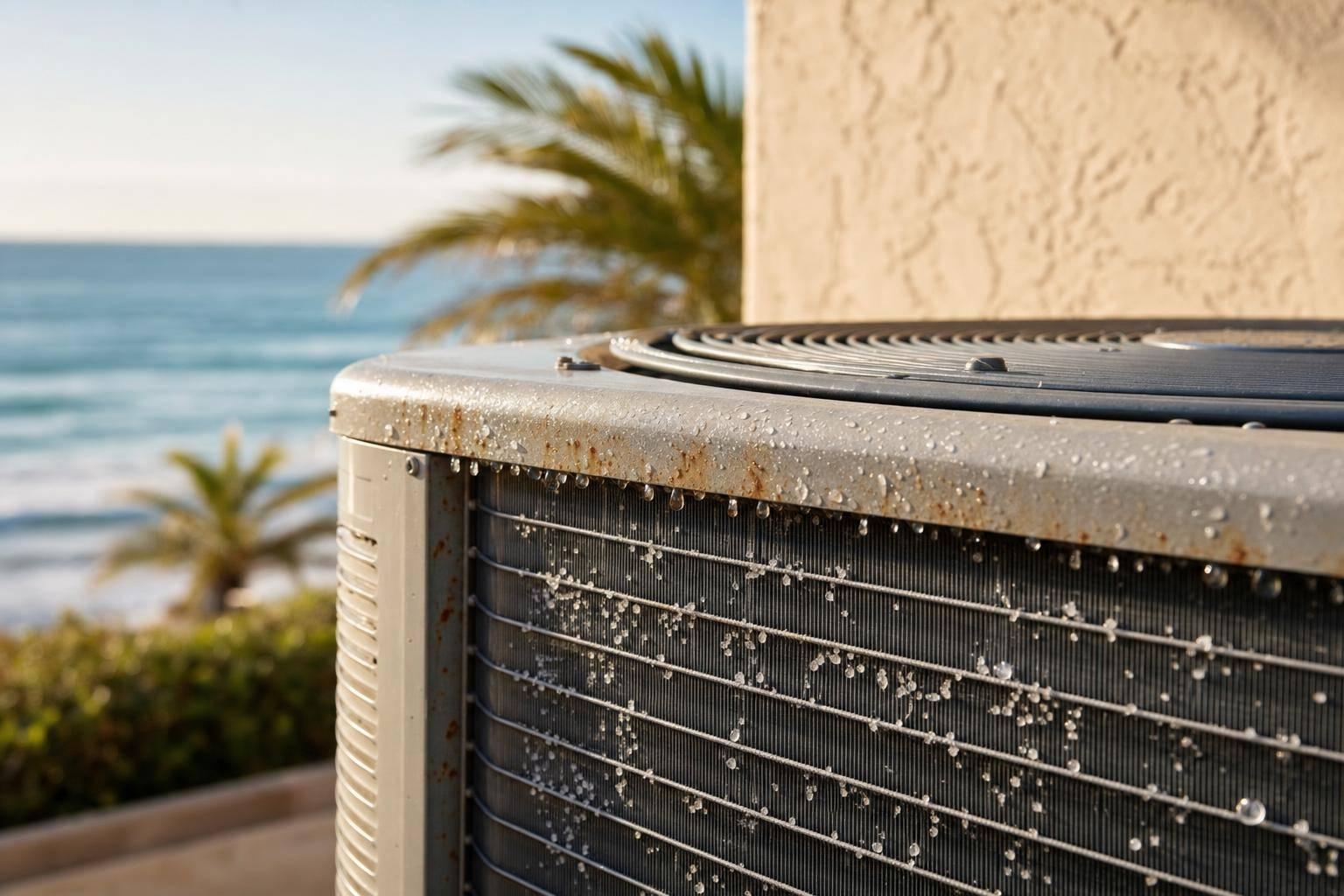
The outdoor unit deals with salt air every day. In Carlsbad, that kind of exposure can corrode metal parts over time. If you spot rust or flaking metal on the outdoor unit, that's a sign the salty coastal air may be taking a toll.
Solutions for humidity, drainage, and corrosion problems
The right fix depends on what's causing the problem. Sometimes it's basic upkeep. Other times, it points to airflow trouble, installation mistakes, or an older system that's starting to wear out. A good place to start is the drain, airflow, and any visible corrosion. If the issue keeps coming back, then it's time to look deeper into the system.
Maintenance steps that restore proper drainage
Start with an inspection, a thorough cleaning, and drain-line maintenance. A clogged condensate drain line can stop water from draining the way it should. And when parts are dirty or airflow is restricted, the system can't pull enough moisture from the air. That can lead to longer run times and a home that still feels damp and sticky.
When humidity points to a larger system issue
If basic maintenance doesn't fix it, the problem is often bigger than moisture buildup alone.
If rooms still feel clammy after maintenance, the cause may be tied to installation, airflow, or equipment age. In coastal homes, corrosion can add to the problem once outdoor components start to rust or break down.
When humidity keeps returning, an HVAC professional should inspect the system to find out whether the cause is repair-related, tied to installation, caused by airflow issues, or linked to aging equipment. If humidity keeps coming back after maintenance, pay attention to the warning signs and move on to prevention steps.
When to call for service and how to prevent repeat problems
Signs to watch for before calling for service
Watch small warning signs for a day or two. If they’re still there after the marine layer clears, call for service. When these issues stick around, they often point to a drain, airflow, or equipment problem.
A few signs that usually mean it’s time to bring in a pro:
- The AC runs, but rooms still feel clammy or sticky
- Indoor humidity stays high no matter what the weather is doing outside
- Water is pooling around the AC
- A musty smell lingers
- The AC short-cycles, which can signal an oversized system
- Visible rust or corrosion on the outdoor unit
Prevention steps for coastal homes
Once you know what’s causing the issue, routine maintenance can help keep the same moisture trouble from coming back. In Carlsbad, Coastal Comfort San Diego Heating and Air can help with preventive maintenance to keep drain lines clear, coils clean, and corrosion under control.
FAQs
Why does my house feel sticky when the AC is on?
If your home feels sticky even while the AC is running, your system may be oversized for the space.
Here’s the issue: a unit that’s too large can cool the air too fast, then shut off before it has time to remove enough humidity. So the temperature drops, but the house still feels damp and uncomfortable.
This tends to stand out more in coastal areas like Carlsbad, where higher humidity puts more pressure on the system to handle both cooling and moisture. Coastal Comfort San Diego Heating and Air can check whether your system is sized to manage both temperature and humidity.
Can coastal humidity damage my AC system?
Yes. In Carlsbad, coastal humidity and salt air can speed up corrosion on AC parts like coils, fasteners, and electrical connections. Over time, that wear can shorten your system’s lifespan compared with equipment farther inland.
Professional maintenance twice a year can help spot early signs of corrosion and make sure leak-detection sensors are working as they should. Coastal Comfort San Diego Heating and Air can help with inspections and repairs.
How can I lower indoor humidity in my home?
Make sure your HVAC system is sized to fit your home. If the unit is too large, it can short-cycle. That means it cools fast, shuts off too soon, and leaves rooms feeling damp instead of dry.
A qualified installer should run a Manual J load calculation instead of sizing the system based only on square footage. That matters in Carlsbad, where coastal humidity can change how a home feels and how hard the system needs to work.
It also helps to schedule professional maintenance twice a year. Regular service can confirm the system is running efficiently and the way it was meant to.