
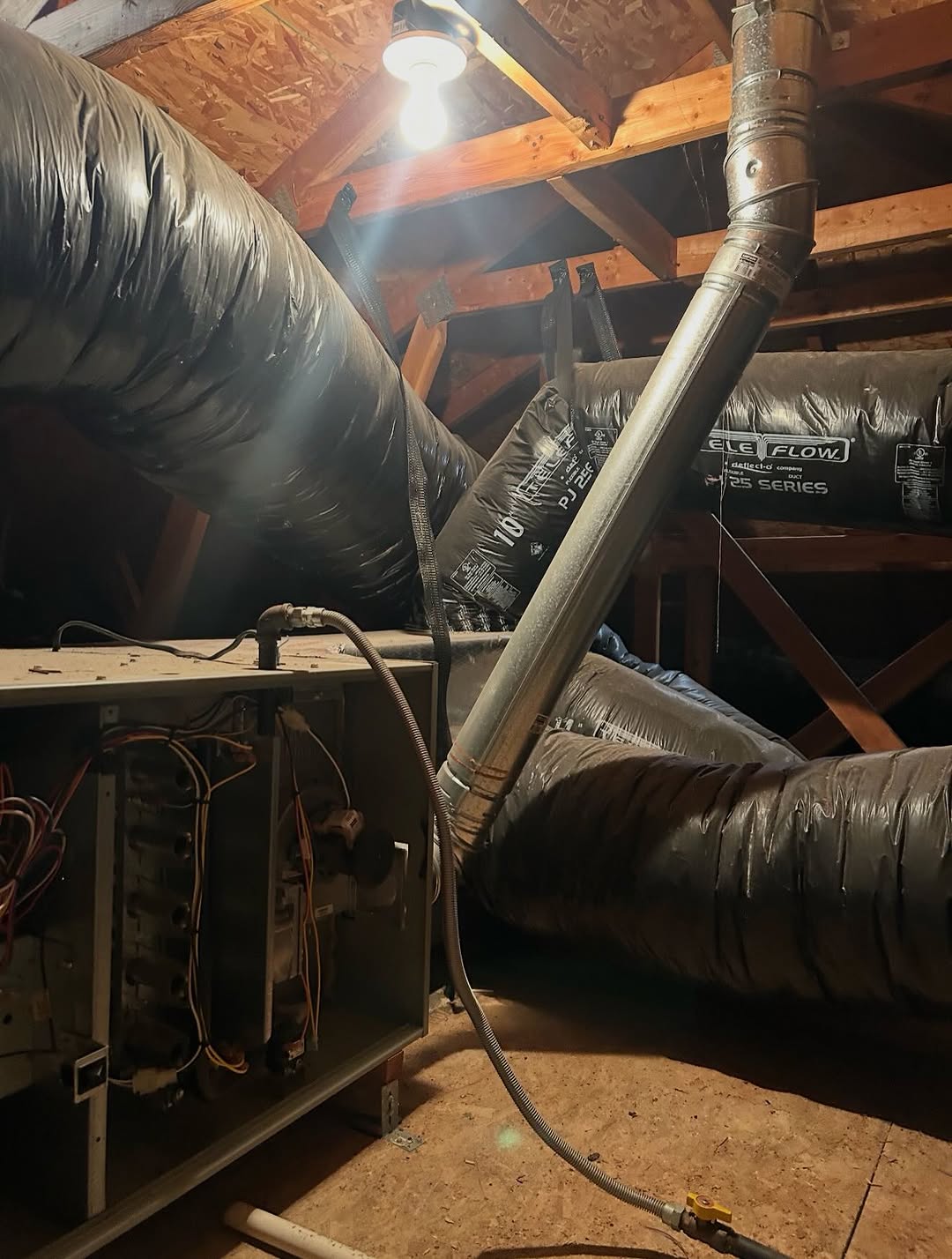
A commercial HVAC maintenance contract is a scheduled service arrangement built around how your specific equipment runs, not a fixed package sold off a shelf. For businesses and property managers in North County, the point is simple. Planned visits move equipment off the emergency call list, so repairs happen on a calendar instead of during business hours. Coastal rooftops in Carlsbad, Oceanside, Encinitas, Cardiff and Leucadia make that planning even more important.
Here's the short version:
- Commercial equipment runs longer hours under heavier loads than residential systems, and most of it sits on a roof taking direct coastal salt air.
- A good agreement is shaped by run hours, building use and distance from the water, not by square footage alone.
- Documented service history across your buildings lets you plan replacements before equipment fails.
What a Commercial Maintenance Agreement Actually Covers
The core of any agreement is a repeating visit where a technician inspects the system, cleans what needs cleaning, replaces filters, checks refrigerant and tests performance. On commercial equipment that work extends to the parts that only exist on larger systems. Economizer dampers and their linkages. Belts and drives. Condensate drain pans and the lines that carry water off a roof.
Those items matter because they are where North County commercial units tend to fail. Coil corrosion, seized economizer dampers, worn belts and backed-up drain pans are the common failures, and every one of them is the kind of problem a technician can catch on a scheduled visit rather than an emergency call.
A contract also defines coverage. Rooftop package units and split systems both belong in the agreement, because a lot of buildings run a mix. A retail suite may have two rooftop units and a separate split system serving a back office or a server closet. If the agreement only names one type of equipment, the other type gets forgotten until it stops.
Fixed package versus equipment-based
Some contractors sell a set number of visits at a set price regardless of what is on the roof. The alternative is to look at the actual equipment, the actual run hours and the actual location, then build a schedule around that. A two-unit office in Vista and a restaurant with kitchen makeup air do not need the same visit count, and charging them the same way means one is overpaying while the other is underserved.
Why Coastal Rooftops Change the Schedule
Salt air is the variable that separates North County commercial maintenance from the same work inland. Equipment sitting on a roof within about a mile of the water takes constant exposure, and the condenser coil is the part that shows it first. Corrosion reduces heat transfer, which makes the unit work harder for the same cooling, which shortens the life of the compressor.
That is why coil cleaning schedules for coastal buildings are built differently. Buildings close to the water generally need more frequent coil attention than buildings further inland. A property manager with a building in Leucadia and another in Escondido should not assume the two sites run on the same calendar. The same reasoning applies to equipment selection near the water, which is covered in more detail in Why Coastal Carlsbad Homes Need Different HVAC Equipment.
The same exposure affects sheet metal, fasteners, electrical cabinets and drain pans. None of this is a reason to panic. It is a reason to put eyes on the equipment more often, because the failures are gradual and visible long before they become a shutdown.
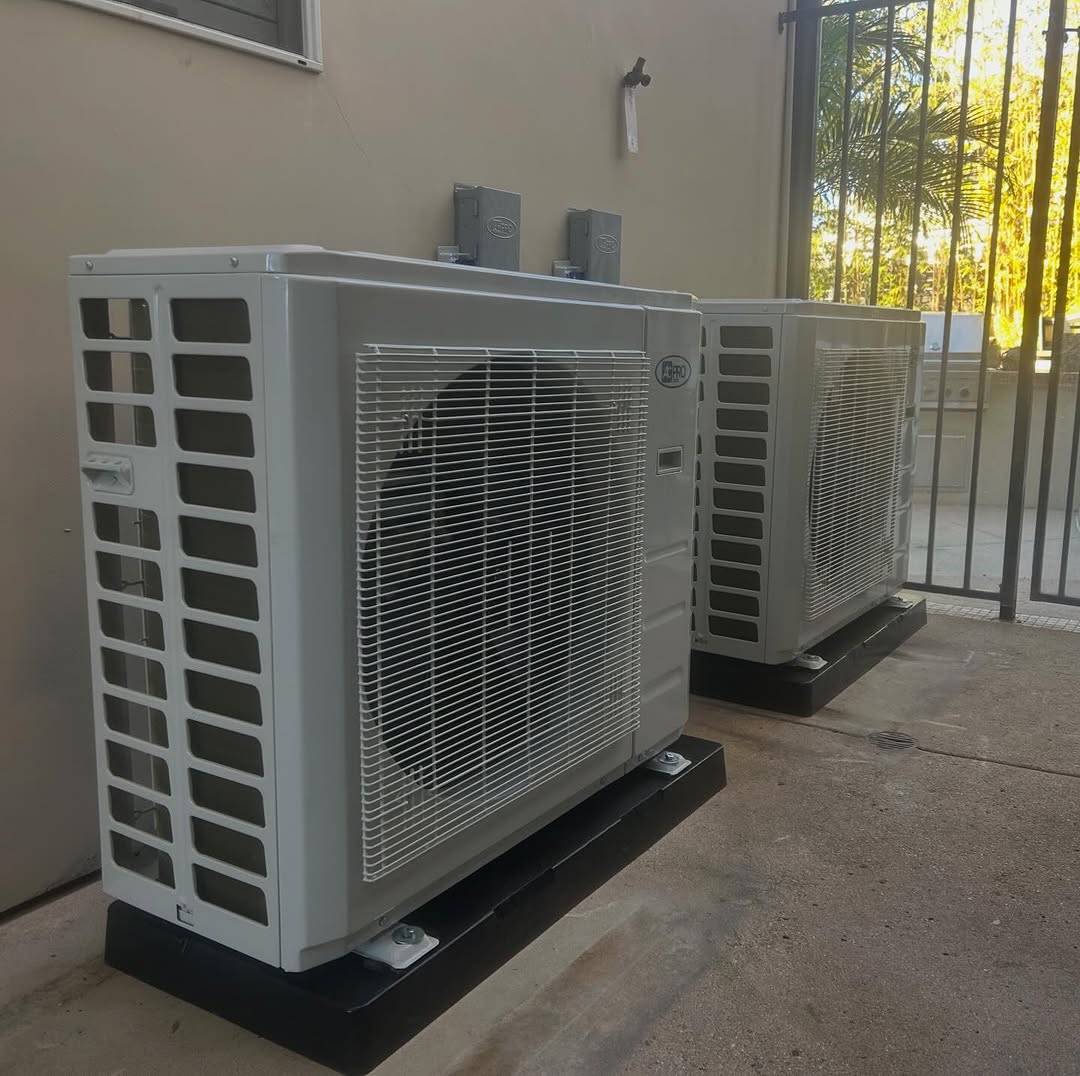
A rooftop package unit on a North County commercial building, the most common commercial setup in the area.
Building the Schedule Around How the Building Runs
Run hours and building use drive everything. A small office with two rooftop units is a different schedule than a restaurant with kitchen makeup air, and a retail space open seven days a week is different again. Here is a plain comparison of how those factors tend to shift the plan.
| Building type | What drives the load | What the schedule leans on |
|---|---|---|
| Small office, weekday hours | Occupancy during business hours only | Standard inspection cadence, filter and coil attention, economizer checks |
| Retail open seven days | Long run hours, door traffic, mixed zones | More frequent filter and belt attention, performance testing across all units |
| Restaurant with kitchen makeup air | Heat load, grease, makeup air balance | Closer attention to airflow, drain pans and filter changes |
Layered on top of all three: any building sitting near the coast carries salt exposure on its rooftop equipment, which raises coil cleaning frequency compared to an inland site with the same hours and the same use.
The other factor is portfolio size. A property manager running several buildings benefits from having one contractor and one service record across all of them. That means one point of contact, one format for the paperwork, and one history to look at when a budget conversation comes up.
What Documentation Buys You
The strongest argument for a maintenance agreement is not the individual visit. It is the record that builds up over time. Documented equipment history lets you plan replacements before they fail, which is a very different conversation than replacing a unit in August because it quit on a Friday.
When the record shows a unit needing repeated attention on the same component, that unit moves onto a capital plan instead of a repair budget. When the record shows a unit performing steadily, it stays in service and the money goes elsewhere. Either way the decision is made with information rather than urgency. If a system does reach the end of its service life, HVAC System Replacements become a planned project rather than an emergency.
For property managers who also oversee residential units, the same logic applies at a smaller scale under Preventative Maintenance, where the goal is still catching small problems before they turn into emergency repairs.
Working with Coastal Comfort San Diego
We are a family-owned heating and air conditioning contractor based in Carlsbad, and we take on Commercial HVAC Maintenance agreements for businesses and property managers throughout Carlsbad, Encinitas, Cardiff, Leucadia and Oceanside, along with the rest of our service area across North County and San Diego.
Rather than sell a fixed package, we look at your equipment and build the schedule around it. Rooftop package units and split systems are both covered. Coil cleaning frequency is set by how close your building sits to the water. If you run multiple properties, you get one contractor and one service record across all of them, plus documented equipment history you can use for planning replacements before they fail.
We are licensed under number 1149074, insured and bonded, with 30 or more years of HVAC experience behind the work. Our Google rating is 5 stars across 17 reviews.
To talk through your buildings and what a schedule would look like, get in touch with us here or call (760) 893-6999.
FAQs
Do you service commercial rooftop package units?
Yes. Rooftop package units are the most common commercial setup in North County, and coastal rooftops in Carlsbad and Oceanside are hard on them. Coil corrosion, seized economizer dampers, worn belts and backed-up drain pans are the failures we see most. All of them are catchable on a scheduled visit.
How often does commercial HVAC need service?
As a baseline we recommend service at least once a year and ideally twice, before summer and before winter. From there it depends on run hours and building use. A small office with two rooftop units is a different schedule than a restaurant with kitchen makeup air or a retail space open seven days a week, and buildings within a mile of the coast generally need more frequent coil attention than inland ones.
Can one agreement cover several buildings?
Yes. Property managers with multiple properties get one contractor and one service record across all of them. That keeps the paperwork consistent and makes it easier to compare how equipment is performing from site to site.
What does a maintenance visit include?
A full system inspection, filter replacement, coil cleaning, refrigerant check and performance testing. On commercial equipment that also means checking economizer dampers, belts and condensate drains. We will let you know if anything needs attention before it becomes a bigger problem.
Does maintenance help decide when to replace equipment?
That is one of the main benefits. Documented equipment history shows which units are needing repeated attention and which are holding steady, so replacements can be budgeted and scheduled ahead of a failure rather than handled as an emergency.