

A cracked heat exchanger means the metal wall that separates burner exhaust from the air blowing through your house has split, and that wall is the one part of a gas furnace with no backup. It is the single safety item a heating inspection is built around. It is also the finding most often used to pressure homeowners, which is why a real one should be documented and shown to you before anyone talks about replacement.
Here's the short version:
- The heat exchanger keeps combustion gases, including carbon monoxide, out of the air your furnace circulates.
- A crack can let those gases mix into supply air, which is why it is treated as a safety issue and not a comfort issue.
- Technicians check for cracks with a visual inspection, a camera or mirror where the metal cannot be seen directly, and combustion readings at the flue.
- Working carbon monoxide alarms on every sleeping level are the backstop between inspections.
- A genuine crack should come with photos or video and an explanation, not just a verdict.
What a Heat Exchanger Actually Does
A gas furnace does two separate things at the same time, and it keeps them apart. Inside the cabinet, burners fire into a set of sealed metal passages. The exhaust from that flame travels through those passages and out the flue to the roof or sidewall. Meanwhile the blower pushes house air across the outside of that same metal. The air picks up heat through the metal and carries it into your ducts.
That metal shell is the heat exchanger. Heat crosses it. Gas is not supposed to. Everything about a safe gas furnace depends on those two paths never meeting.
The metal expands when the burners fire and contracts when they shut off. That cycle repeats every heating season for the life of the furnace. Over many years the metal fatigues, and restricted airflow makes it worse because a furnace starved for return air runs hotter than it was designed to. That is one reason a dirty filter is not only an efficiency problem. It changes the temperatures the heat exchanger lives with.
Why a Crack Matters
When the metal splits, exhaust gas has a new path. Depending on where the crack sits and how the blower pressurizes the cabinet, combustion products can be pulled into the air stream and delivered into bedrooms and living areas. Those products include carbon monoxide, a gas you cannot see or smell.
That is the whole reason this gets attention. A cracked heat exchanger is not a performance complaint. The furnace may still heat the house. It may still cycle normally. The problem is what is riding along with the warm air.
Symptoms are unreliable on their own. Soot around the burner area, a flame that rolls or shifts when the blower starts, a strong exhaust odor, moisture on windows near supply registers, or headaches and nausea that improve when you leave the house all deserve attention. None of them confirm a crack by themselves, and a crack can exist without any of them. Confirmation comes from inspection, not from guessing.
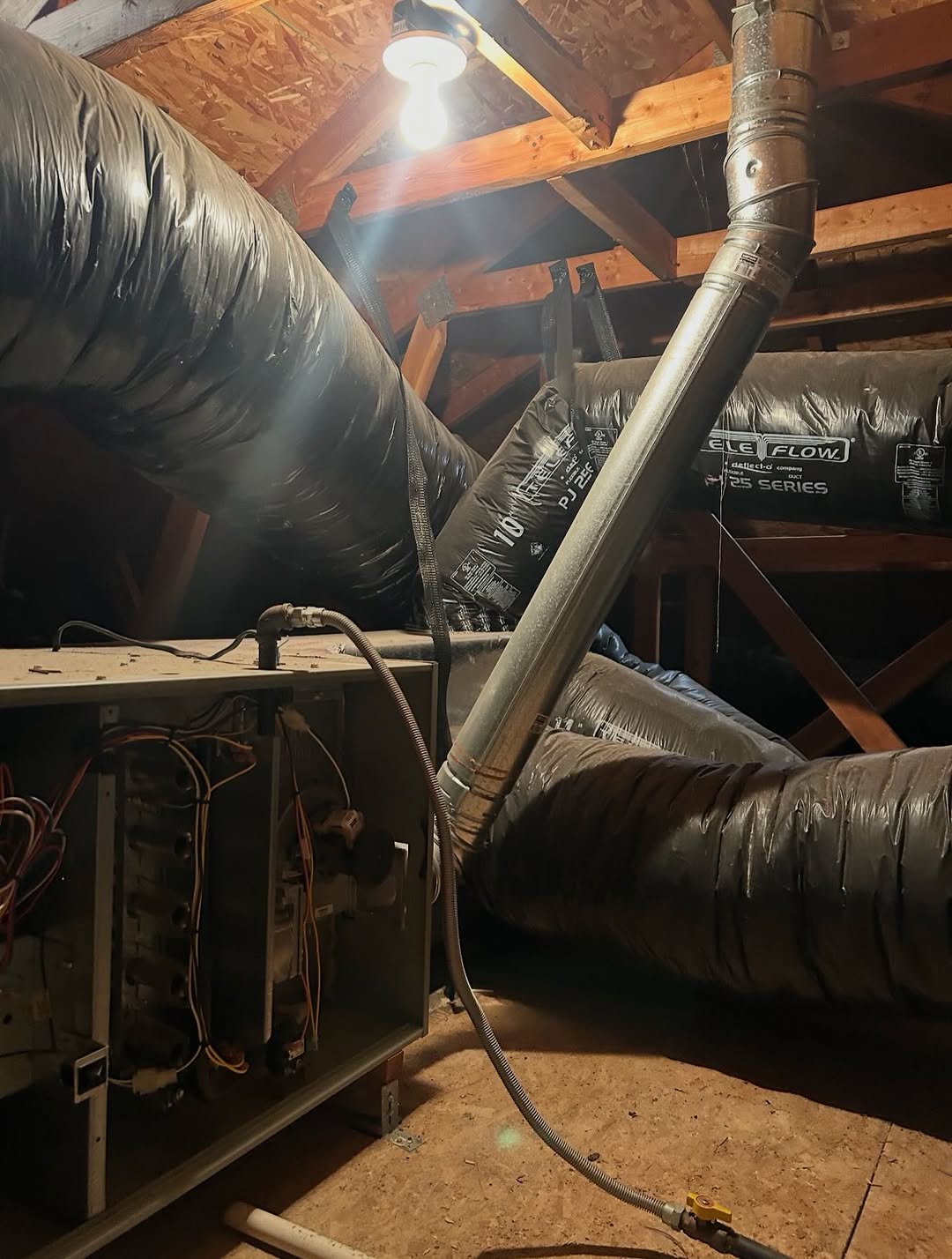
A technician with the furnace blower door removed, looking into the burner compartment where the heat exchanger is accessed.
How a Technician Checks for a Crack
There is no single test that covers every furnace design. A proper check layers a few methods.
Visual inspection
The blower door comes off and the burner assembly gets inspected first. A technician looks at the visible portions of the heat exchanger for splits, holes, rust-through, and separated seams. They also watch the burner flames with the blower running and with it off. A flame that changes shape, lifts, or pulls sideways the moment the blower engages suggests air is moving where it should not.
Camera and mirror inspection
Most of a heat exchanger is not visible from outside the cabinet. That is where an inspection camera on a flexible scope earns its keep, along with mirrors and a strong light. The camera goes into the passages so the inner surfaces, bends, and weld seams can be seen. This is also what produces the photo or video evidence you should expect to be handed if something is found.
Combustion readings
A combustion analyzer samples the flue gas and reports what the furnace is actually producing. Readings taken over a full cycle can reveal a combustion problem that does not show up on a quick look. Technicians also check draft and look for signs the exhaust is not leaving the way it should. Combined with camera images, these readings build the case either way.
| What gets checked | What it can show | What it does not prove alone |
|---|---|---|
| Visible metal and seams | Splits, rust-through, separated joints | A clean view of one section says nothing about the rest |
| Flame behavior with blower on | Air crossing into the combustion path | Burner or gas pressure issues can look similar |
| Camera inspection of inner passages | Cracks you cannot otherwise see | Access varies by furnace design |
| Combustion and draft readings | A combustion problem in progress | Venting or burner faults can produce similar numbers |
| Carbon monoxide alarm history | Exposure happening in the home | Alarms are a backstop, not a diagnosis |
Carbon Monoxide Alarms Are the Backstop
An annual inspection is a snapshot. A heat exchanger can fail between visits. Alarms are what cover the gap.
Put carbon monoxide alarms on every sleeping level and test them. Replace them when they reach the end of their service life, which is printed on the unit. Keep filters changed so the furnace is not fighting for air. If an alarm sounds, get everyone outside into fresh air and call for help before anyone goes back in to investigate.
What Happens When One Is Confirmed
A confirmed crack means the furnace should not keep running as-is. From there it is a repair or replace decision based on the age of the equipment, whether the part is still available, and what the rest of the system looks like. A heat exchanger is not a small part, so on older furnaces the math often points toward HVAC System Replacements rather than a component swap. On a newer furnace still inside its manufacturer warranty, a part replacement can be the right call. Our guide on when to repair or replace a furnace in Carlsbad walks through how that comparison usually shakes out.
What should not happen is a verdict with no evidence. Ask to see the crack on camera. Ask for the combustion readings. Ask which inspection method found it. A technician who found a real problem will be glad to show you.
Getting Your Furnace Checked Before Heating Season
Coastal Comfort San Diego is a family-owned heating and air conditioning contractor in Carlsbad serving all of San Diego County, with 30 or more years of HVAC experience behind the work. We handle Furnace Repair & Installation across Carlsbad, Oceanside, Encinitas, Vista, San Marcos, Escondido, Del Mar, Solana Beach, Poway, and the rest of North County. When we inspect a heat exchanger, you get to see what we see.
Our Preventative Maintenance plan covers a fall visit before heating season and a spring visit before cooling season, which is the schedule that catches this kind of problem early. Plan members also get priority scheduling and a discount on service work.
"Trever and his team installed new heating and air conditioning systems for us. Professional, on time, and the pricing was fair. They explained everything clearly and cleaned up after themselves. Highly recommend!" Sue E., San Diego
To get a furnace looked at, tell us about your project and we'll get back to you fast or call (760) 893-6999.
FAQs
Can a cracked heat exchanger be repaired instead of replaced?
The heat exchanger itself is a sealed assembly, so it gets replaced rather than patched. Whether that makes sense depends on the age of the furnace, parts availability, and whether the manufacturer warranty still applies. On an older system, putting that money toward a new furnace usually returns more.
Will my carbon monoxide alarm go off if the heat exchanger is cracked?
Not necessarily. A crack can allow exposure at levels or timing that an alarm does not catch, and the crack may only open up when the metal is hot. Alarms are an important backstop, not a substitute for having the furnace inspected.
How often should a gas furnace be inspected?
Once a year before heating season is the normal schedule for a residential gas furnace. That is why our maintenance plan puts one visit in the fall and one in the spring. Homes where the furnace runs long hours or where filters get neglected benefit from closer attention.
Does switching to a heat pump avoid this issue entirely?
A heat pump has no burners and no combustion, so there is no heat exchanger separating exhaust from your indoor air. It heats and cools with one system, which suits San Diego's mild climate well. If your furnace is near the end of its life anyway, that comparison is worth having during the estimate.
Should I keep using the furnace until it is inspected?
If a technician has confirmed a crack, the furnace should be shut down until it is repaired or replaced. If you only suspect a problem, get it inspected promptly and make sure your carbon monoxide alarms are working in the meantime. If an alarm sounds, get everyone out into fresh air first.