
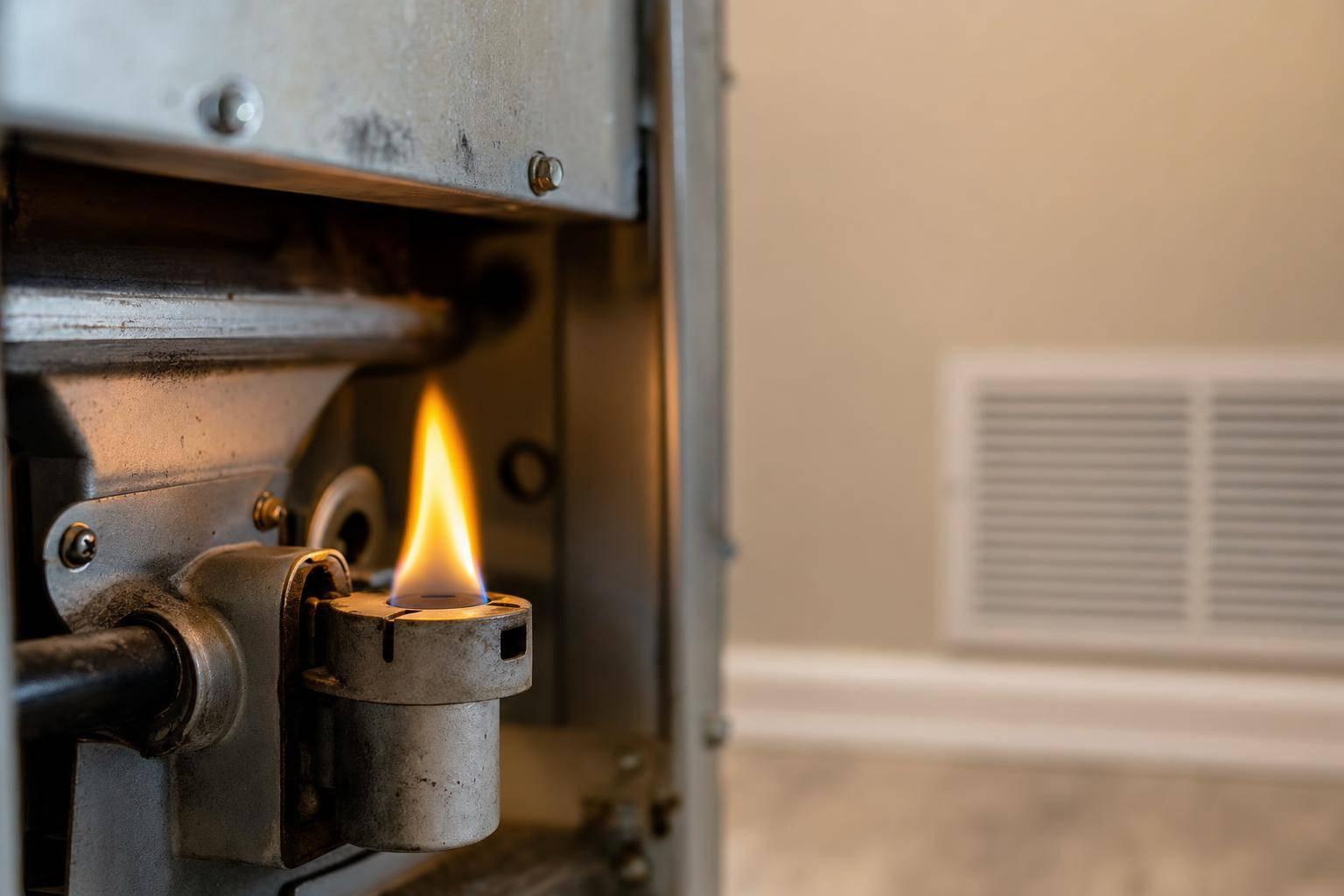
Signs Your Furnace Needs Repair Before Winter in North County
If your furnace is short cycling, blowing weak air, making new noises, giving off a burning smell, or showing soot or a yellow flame, I’d get it checked before winter. Some problems affect comfort. Others can point to a safety issue.
Here’s the short version:
- Performance issues: short cycling, hard starts, shutdowns, weak airflow, uneven room temps, higher heating bills
- Warning signs you can hear or smell: banging, rattling, buzzing, squealing, burning odor, electrical smell
- Things you can see: rust, soot, moisture, corrosion
- Safety risks: yellow or orange flame, smoke, soot near the burner or vent, carbon monoxide concern
- What I can check first: thermostat setting, breaker, furnace switch, air filter, blocked vents
- When to stop using it: if I smell smoke, suspect carbon monoxide, or see signs of bad combustion
A small issue can stay hidden during light fall use. Then a cold night hits, the system runs longer, and the problem shows up fast. In places like San Marcos and other inland parts of North County, colder swings can put more stress on a furnace when winter starts.
One more point: heating can make up about 29% of home energy use in U.S. homes, so a furnace that is not running well can show up in both comfort and utility bills.
If I notice repeat shutdowns, uneven heating, odd sounds, or signs of soot or a yellow flame, I wouldn’t wait.
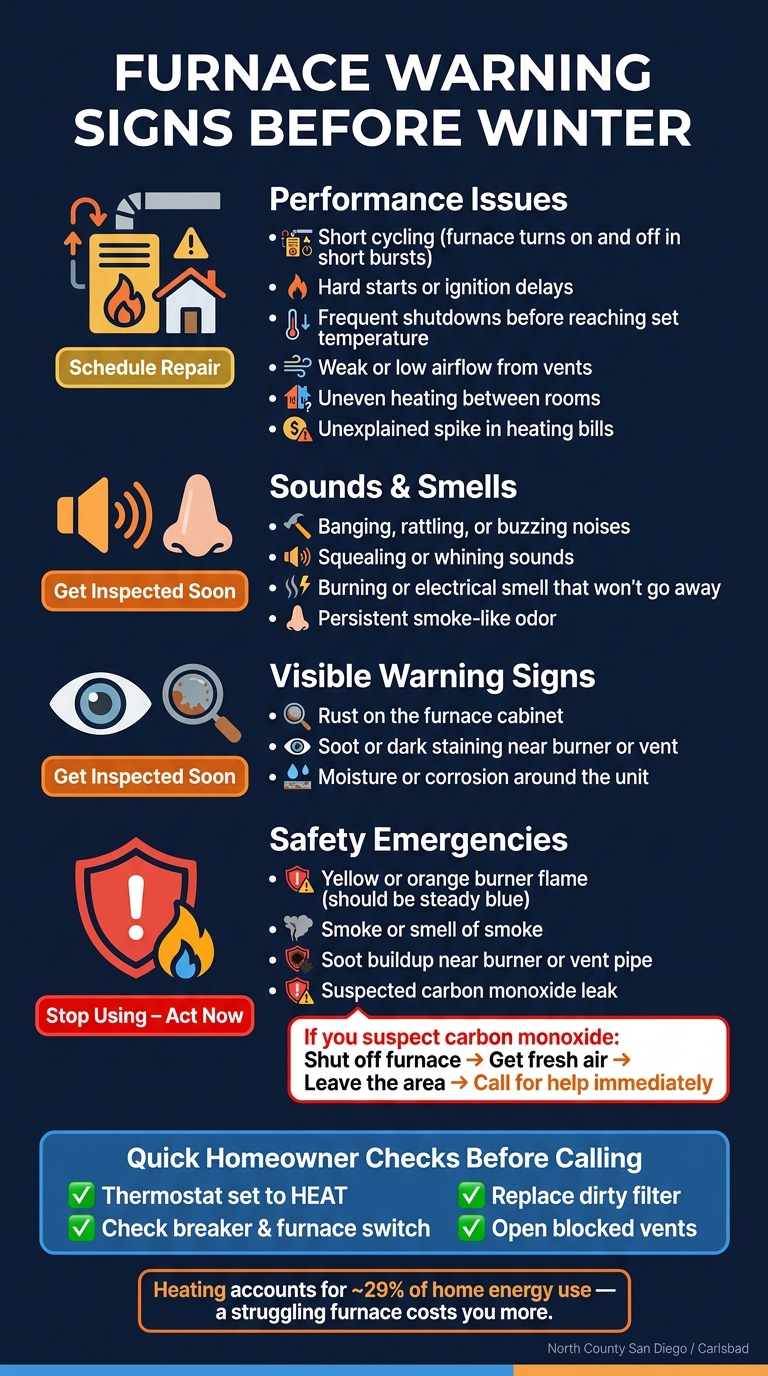
Furnace Warning Signs: When to Call, When to Stop Using It
Furnace performance signs that call for repair
Short cycling, startup trouble, and frequent shutdowns
If your furnace keeps switching on and off in short bursts without fully heating your home, that’s called short cycling. You may also notice a delay before it ignites, or that it shuts off before the thermostat reaches the temperature you set.
These patterns are easy to brush off at first. Maybe the house still feels “warm enough,” so it doesn’t seem urgent. But this kind of stop-and-start behavior usually points to a problem that should be checked before winter. If you notice it, schedule service promptly.
Weak airflow and uneven heating between rooms
Low airflow from your vents is another sign that something’s off. The same goes for rooms that stay much cooler than others, even when the heat is running.
Start with the simple stuff:
- Make sure vents are open
- Check that furniture, rugs, or curtains aren’t blocking airflow
If the issue sticks around after that, it’s time to schedule service.
Higher heating bills with no clear reason
A heating bill that jumps for no clear reason can be a sign that your furnace isn’t running as well as it should. If your usage hasn’t changed much but your bill has, an inspection before winter is a smart move.
Performance problems often show up before noises, odors, or visible damage do.
sbb-itb-a7630c3
5 Signs Furnace Maintenance Is Needed
Sounds, odors, and visible signs not to ignore
If performance changes are hard to spot, your furnace often gives itself away in other ways. Strange sounds, odd smells, and visible wear are often the next signs that something isn't right.
Banging, rattling, buzzing, squealing, or whining noises
A normal furnace should sound steady. If you hear a new noise, or one that keeps getting worse, it needs attention.
Banging, rattling, buzzing, squealing, or whining can all point to trouble inside the system. Maybe a part has come loose. Maybe something is wearing down. Either way, it needs an inspection before colder weather puts the furnace under heavier use.
Burning or electrical smells that do not go away
A light dusty smell during the first startup of the season is normal. That should clear out pretty fast.
What isn't normal is a smell that sticks around, comes back every time the furnace runs, or smells like burning, smoke, or electricity. If you notice a burning or electrical odor that won't go away, turn the furnace off. Then don't run it again until a technician has inspected it.
Rust, soot, moisture, or corrosion near the furnace
Take a look around the furnace from time to time. Rust, soot, moisture, or corrosion on the cabinet or nearby surfaces can be a sign that a problem is starting to show up.
It makes sense to get these signs checked before colder weather puts more strain on the system.
Persistent odors, new noises, or visible rust or moisture are all clear signs that it's time for service.
Safety first: combustion and carbon monoxide warning signs
Some furnace issues are annoying. Others can put people at risk. The signs in this section are not minor comfort problems. They call for immediate action, not more DIY troubleshooting.
Yellow or orange flame, soot, and other combustion concerns
In a gas furnace, the burner flame should be a steady blue. If the flame looks yellow or orange, that can point to unsafe combustion and a possible carbon monoxide risk.
Also check for soot or dark staining around the burner or vent pipe. Those marks can mean the furnace is not burning fuel safely. If you spot any of these warning signs, don’t keep using the system heavily until it has been checked.
If any of these signs appear, treat the system as unsafe until it is inspected.
When to shut off the furnace and leave the area
If you suspect carbon monoxide, see smoke, or smell smoke, shut off the furnace, get fresh air, and leave the area. Don’t try to figure it out yourself. Call for urgent professional help instead.
Carbon monoxide alarms can alert you to a problem, but they do not fix it.
If you suspect a combustion or carbon monoxide issue in North County, Coastal Comfort San Diego Heating and Air can inspect the system.
What homeowners can safely check and when to schedule repair
Safe checks homeowners can do before calling for service
If you notice any of those warning signs, start with a few safe checks before you schedule service.
First, cover the basics:
- Make sure the thermostat is set to heat
- Check the breaker and the furnace switch
- Replace a dirty filter
- Open any blocked vents
When you do call, give the technician a clear picture of what’s happening. Share what you checked, when the problem shows up, how often it happens, and whether you’ve noticed noises, odors, shutdowns, rust, or moisture.
That kind of detail helps them figure out how serious the issue may be. And from there, the timing of the symptom usually tells you how soon the repair should happen.
How to judge how soon repair is needed before winter
Some furnace problems need attention right away.
Immediate concerns include anything that may point to a combustion or carbon monoxide issue, such as a yellow flame, soot buildup, or a persistent burning smell. If you notice any of those, stop using the system and get professional help at once.
Prompt repair includes problems like short cycling, ignition failure, or a furnace that keeps shutting down. These issues may not call for emergency service, but they shouldn’t sit for long.
If the problem isn’t immediate but keeps coming back after your basic checks, schedule repair before winter.
Conclusion: Catch furnace problems early for a safer winter
The warning signs covered in this article are often easier to deal with before colder weather sets in.
If your furnace is showing any of the signs described here, Coastal Comfort San Diego Heating and Air, an HVAC contractor based in Carlsbad serving North County San Diego, handles furnace repair and installation for homeowners throughout the area. Schedule repair now so the furnace is ready before colder weather arrives.
FAQs
Can a dirty filter cause short cycling?
Yes. A dirty filter can restrict airflow, and that often leads to short cycling.
If your furnace can’t pull in enough air, it may overheat and trip a safety shutoff. That makes the system turn on and off more often than it should. If that’s happening, check the filter or contact Coastal Comfort San Diego Heating and Air.
How can I tell if uneven heating is a furnace issue?
Uneven heating usually means your furnace or air distribution system is having trouble keeping the whole house at a steady temperature. In many cases, the cause is pretty straightforward: blocked or leaking air ducts, a blower motor that’s starting to fail, or a furnace that isn’t the right size for your home.
If some rooms feel much warmer or colder than others, it’s a sign your system may need professional attention. Coastal Comfort San Diego Heating and Air can inspect the system and find the source of the problem.
What should I do if my carbon monoxide alarm goes off?
If your carbon monoxide alarm goes off, get everyone to fresh air right away. Go outside if you can, or move near an open window or door. Make sure every person is accounted for.
Do not go back inside until emergency services say it's safe. After that, contact emergency responders or your local fire department. If your furnace may be the cause, Coastal Comfort San Diego Heating and Air can inspect and repair it once the area is cleared.