
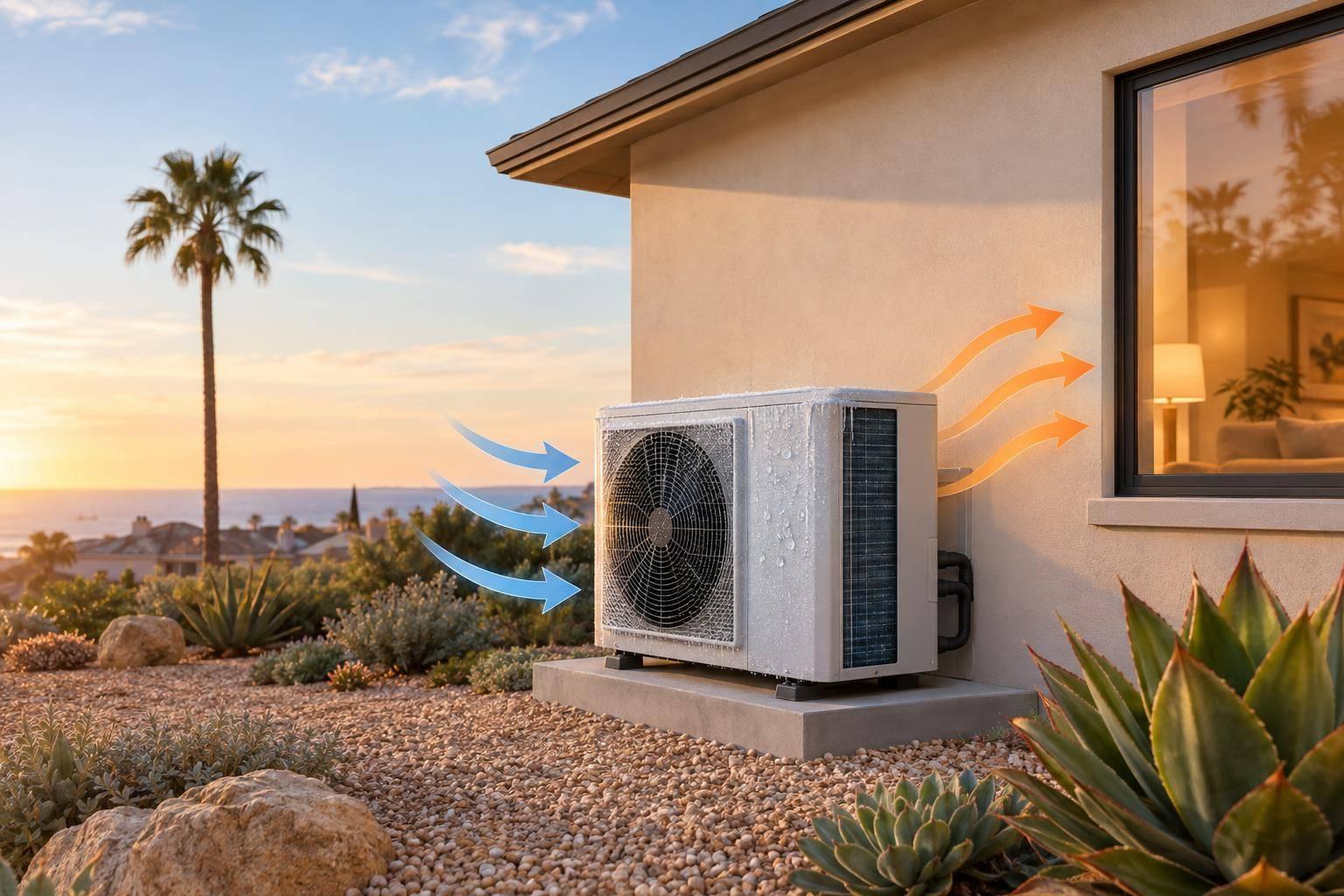
How Heat Pumps Work in the Mild San Diego Climate
A heat pump can handle both heating and cooling in San Diego’s mild climate. My advice: request a Manual J load calculation before choosing a unit, and check your filter monthly during heavy use.
Here’s what I’d keep in mind:
- How it works: Refrigerant carries heat indoors in winter and outdoors in summer. The thermostat controls when the system runs.
- What to expect: Automatic defrost clears frost from the outdoor coil. Brief changes in sound or airflow can be normal.
- What affects comfort: Coastal, inland, and elevated locations have different needs. Sizing, insulation, ducts, and installation all matter.
- What you can do: Keep vents and the outdoor unit clear, follow the manufacturer’s instructions, and <u>call a professional if ice remains after defrost or heating and cooling weaken</u>.
The takeaway? Mild weather helps, but the right installation and regular care make the difference.
How A Heat Pump Works - HVAC
sbb-itb-a7630c3
How Heating, Cooling, and Defrost Work
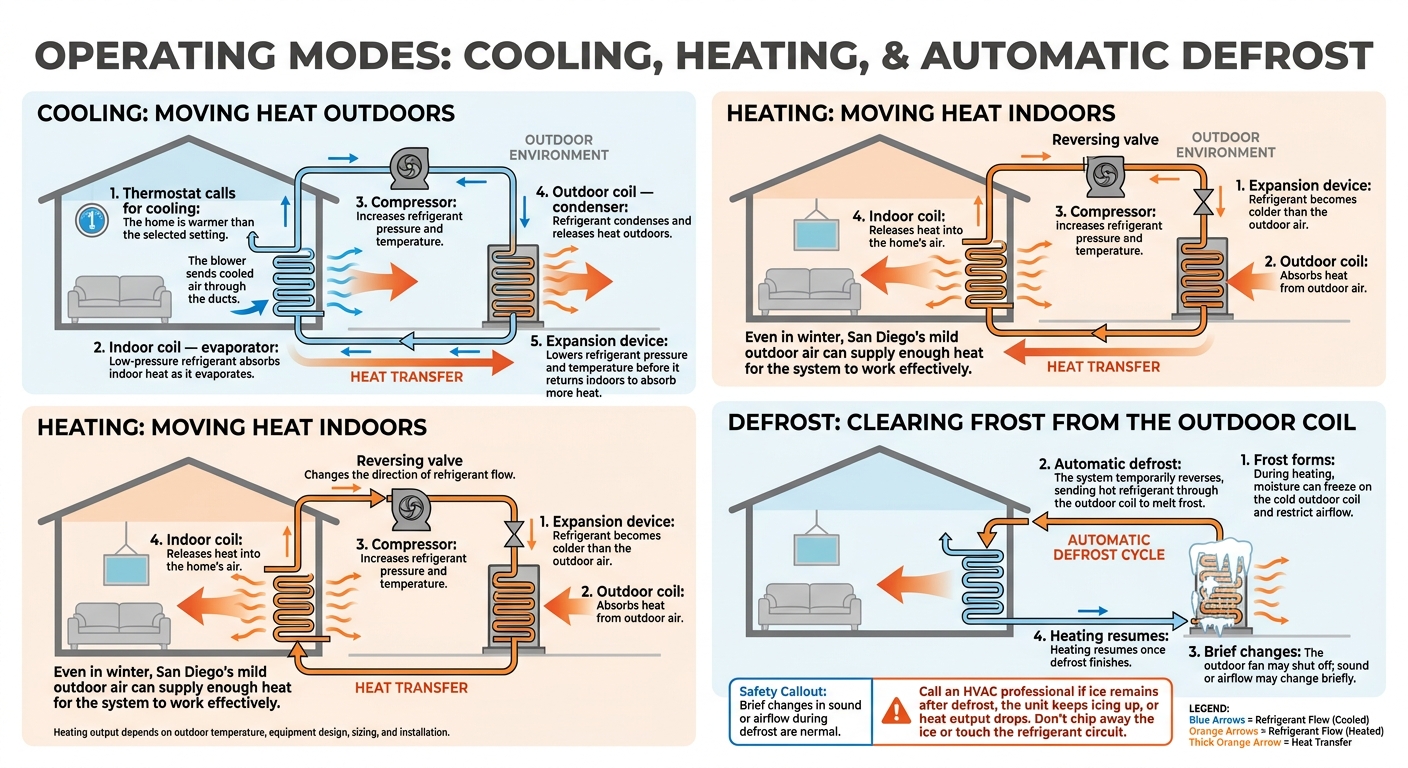
How Heat Pumps Work: Heating, Cooling, and Defrost
With its core parts in place, a heat pump switches between cooling, heating, and defrost. Each mode changes where the system moves heat.
Cooling: Moving Heat Outdoors
Cooling starts when the thermostat senses that your home is warmer than the selected setting. The indoor coil acts as the evaporator: low-pressure refrigerant absorbs indoor heat as it evaporates. The compressor then increases the refrigerant’s pressure and temperature. At the outdoor coil, which acts as the condenser, the refrigerant condenses and releases that heat outdoors. Meanwhile, the blower sends cooled air through the ducts.
Next, the refrigerant passes through the expansion device, which lowers its pressure and temperature. It then returns indoors to absorb more heat. For heating, the same system reverses the process.
Heating: Moving Heat Indoors
The reversing valve changes the direction of refrigerant flow so the outdoor coil absorbs heat and the indoor coil releases it. After flowing through the expansion device, the refrigerant is colder than the outdoor air. That temperature difference lets it absorb heat at the outdoor coil.
Even in winter, San Diego’s mild outdoor air can supply enough heat for the system to work effectively. The compressor increases the refrigerant’s pressure and temperature, and the indoor coil releases heat into your home’s air. Heating output depends on outdoor temperature, equipment design, sizing, and installation.
Defrost: Clearing Frost From the Outdoor Coil
During heating, moisture can freeze on the cold outdoor coil and restrict airflow. Automatic defrost temporarily reverses the system, sending hot refrigerant through the outdoor coil to melt the frost. The outdoor fan may shut off, and you may hear a different sound or notice a brief change in airflow. Heating resumes once defrost finishes.
Those brief changes are normal. But call an HVAC professional if ice remains after defrost, the unit keeps icing up, or heat output drops. Don’t chip away the ice or touch the refrigerant circuit.
Heat Pump Advantages and Limitations in San Diego
For San Diego homeowners, the right fit matters: a heat pump needs to match both the home and the local climate.
| Advantages | Limitations |
|---|---|
| One reversible system provides both heating and cooling. | Heating output and efficiency vary with outdoor conditions. |
| The system moves heat instead of burning fuel. | Defrost can briefly interrupt or change heating. |
| San Diego’s mild winters suit heat pump operation. | Poor sizing, restricted airflow, refrigerant problems, or inadequate maintenance can reduce comfort and performance. |
Performance starts with proper sizing and installation. Coastal, inland, and elevated areas of San Diego have different conditions, so equipment needs to fit the site.
Before installation, request a Manual J load calculation rather than choosing equipment based only on floor area or the old unit’s size. Also review insulation, ductwork, airflow, electrical needs, thermostat compatibility, and outdoor-unit placement. Proper sizing sets the baseline for day-to-day performance.
How to Use and Maintain Your Heat Pump
Set the Thermostat and Keep Airflow Clear
Once your heat pump is running, steady thermostat settings and clear airflow help it work as designed. Follow the heat pump and thermostat manufacturers’ instructions. Avoid large temperature changes at the thermostat, which can cause extra cycling.
Keep supply vents and return-air grilles open and free of furniture, rugs, curtains, and stored items. During heavy use, check the filter monthly. Clean or replace it as directed, using the correct size and type.
Clear debris around the outdoor unit, especially after storms or yard work. Keep vegetation away from the coil and fan discharge. Don’t put objects on the unit or cover it while it’s running. Leave panels in place, and don’t clean inside the cabinet.
Know When to Call an HVAC Professional
Call for service if you hear unusual noises or notice weak airflow, frequent cycling, poor heating or cooling, or ice that remains after defrost. Light frost is normal when the defrost cycle clears it.
To help the technician assess the problem, record when it happens, the thermostat mode and setting, and whether ice remains after defrost. Leave refrigerant testing, electrical work, coil service, component replacement, and repairs to a qualified HVAC professional.
If you notice a burning smell, exposed wiring, or severe noise, turn the system off if it’s safe to do so and arrange service. Don’t keep running it.
Check System Sizing and Performance
If basic maintenance doesn’t fix the issue, the next step is to check the factors that affect performance. If your home becomes less comfortable, ask a professional to inspect airflow, duct condition, refrigerant charge, and controls.
Before recommending changes, the professional should check charge and airflow against the manufacturer’s specifications and inspect the electrical components.
Conclusion: Support Reliable Heat Pump Comfort
A heat pump moves heat rather than creating it. Its automatic defrost cycle clears frost so heating can continue.
San Diego’s mild climate is a good fit for heat pumps. Still, performance depends on correct sizing, proper installation, and regular maintenance.
Follow the manufacturer’s instructions, keep registers, grilles, and the outdoor unit clear, and check the filter as directed. If comfort problems persist, schedule a professional evaluation with Coastal Comfort San Diego Heating and Air.
FAQs
Will my heat pump need backup heat in San Diego?
San Diego’s mild climate means heat pumps can typically handle heating and cooling year-round without backup heat.
Coastal Comfort San Diego Heating and Air installs and services heat pump systems throughout North County San Diego. If you’re thinking about a heat pump, our team can assess your home’s needs and size the system correctly to help it perform at its best.
How long should a defrost cycle last?
The provided search results don’t state how long a heat pump defrost cycle should last. If you have questions about your system or concerns about its performance, contact Coastal Comfort San Diego Heating and Air for professional help.
Can I use my existing ducts with a heat pump?
Yes, you can use your existing ducts with a heat pump. But your ductwork may need repairs, sealing, or replacement to help the new system run efficiently.
Whether you're retrofitting your current system or replacing it entirely, checking your home's setup can help you choose the right configuration for your needs.