
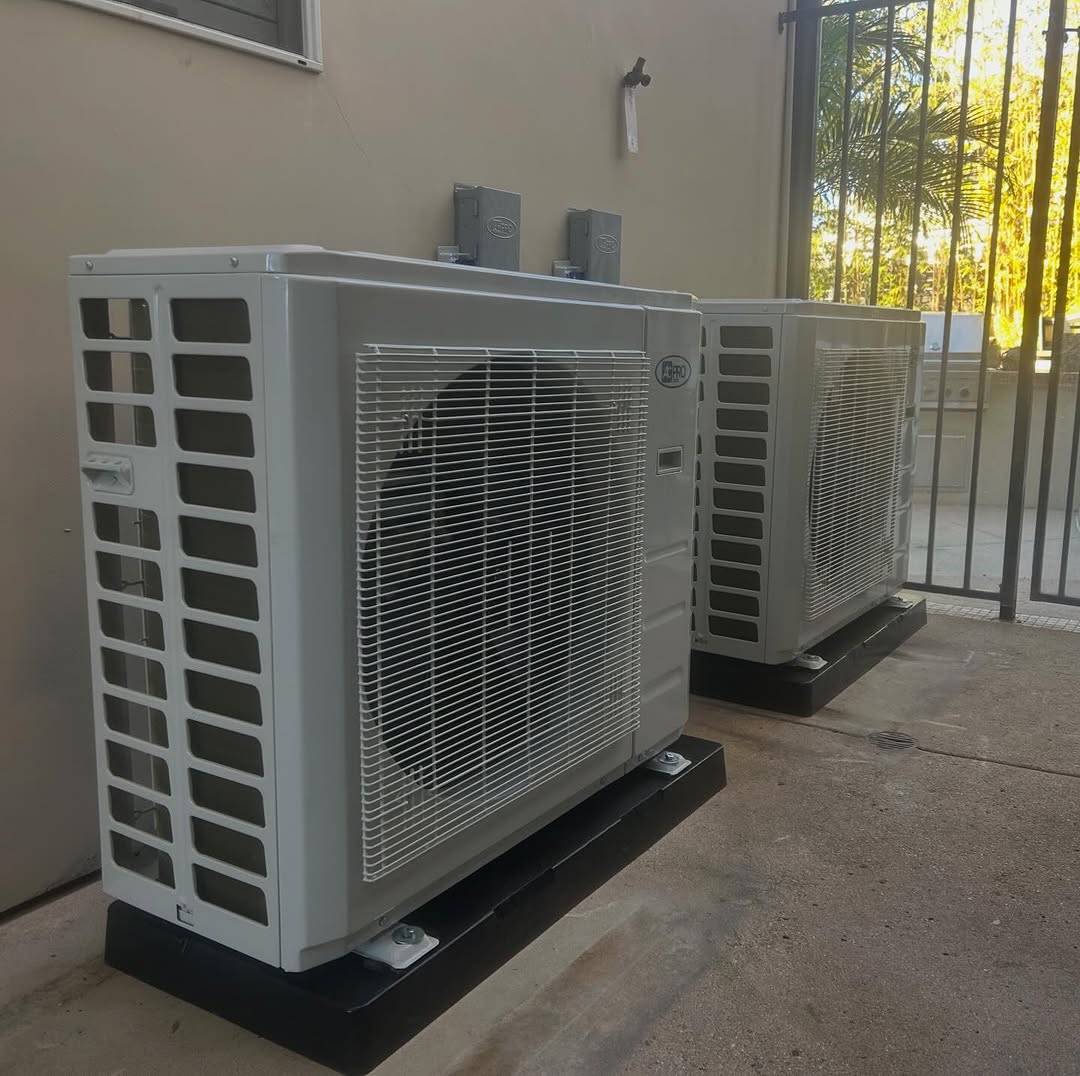
If I’m switching from a gas furnace to a heat pump in Carlsbad, I need to check three things first: ducts, electrical panel, and insulation. In this area, heat pumps usually work well because winter lows often stay around 48°F to 52°F. But the job only goes smoothly if the home can handle the airflow and electrical load.
Here’s the short version:
- I’m replacing gas heat with an all-electric system that can heat and cool
- Most homes can keep their ducts if airflow and leakage test out well
- A contractor should run a Manual J load calculation before choosing system size
- Some homes need electrical work, duct fixes, or coastal-grade outdoor equipment
- The install often takes 2 to 3 days
- For 2026, state and utility rebates matter more because the federal 25C tax credit is gone
If I want this switch to make sense, these points matter most:
- Older AC + older furnace usually make a full swap easier to justify
- Leaky ducts can waste 20% to 30% of system output
- Homes near the coast should use outdoor equipment with salt-air-resistant coatings
- A heat pump in Carlsbad can work well year-round because the climate is mild
- A newer furnace may point me toward dual-fuel instead of a full gas-to-electric change
A fast way to think about it: if my home has sound ducts, enough panel space, and aging heating/cooling equipment, a heat pump is often a solid fit. If not, I should expect extra work before the new system goes in.
| Check first | Why it matters | What I should ask for |
|---|---|---|
| Ductwork | Heat pumps need good airflow | Duct leakage test and static pressure check |
| Electrical panel | Heat pumps need dedicated power | Panel review before install |
| Equipment sizing | Wrong size hurts comfort and efficiency | Manual J load calculation |
| Coastal exposure | Salt air can wear down outdoor units | Corrosion-resistant coil coating |
| Rebate status | 2026 savings depend on program rules | Contractor rebate review before work starts |
So before I approve anything, I’d ask for the load calculation, duct test results, and panel review in writing. That gives me a clear picture of whether a full conversion or a dual-fuel setup fits my home better.
Retrofitting a Furnace Central AC to Furnace Heat Pump
Assess Whether Your Home and System Are Ready for Conversion
Once you’ve got the basics down, the next step is simple: check whether your home can actually support a heat pump.
Inspect Ductwork, Airflow, and Home Insulation
Start with the parts of the house that have the biggest effect on heat pump performance: ductwork, insulation, and electrical capacity.
A duct leakage test typically costs $200–$400 and shows how much conditioned air is escaping through the ducts. That matters because leaky ductwork can account for 20% to 30% of a typical system’s energy waste.
Your contractor should also run a Manual J load calculation before suggesting equipment. If you have a multi-level home or rooms that heat and cool unevenly, they should add a Manual D duct analysis to check whether the duct layout can deliver balanced airflow. If someone wants to size the system based only on square footage or your old furnace, that’s a red flag.
Determine What Can Be Reused and What Needs Replacing
Once the testing is done, sort the system into two buckets: what can stay and what needs to go.
| Component | Reuse? | Notes |
|---|---|---|
| Ductwork | Yes, if in good condition | Needs static pressure and airflow testing |
| AC Condenser | No | Replaced by the outdoor heat pump unit |
| Gas Furnace | No (full conversion) | Replaced by an indoor air handler |
| Indoor Coil | No | Most existing AC coils are not compatible with heat pumps |
| Refrigerant Lines | Sometimes | Sizing requirements often differ for heat pumps |
| Thermostat | No | Must be configured for heat pump operation |
| Electrical Panel | Yes, if capacity allows | May need a new dedicated circuit or upgrade |
Check Electrical Capacity Before the Project Begins
After the system is sized, make sure the house can power it safely before installation begins. A heat pump needs a dedicated circuit, a new breaker, and an outdoor disconnect. Some homes also need an electrical panel upgrade.
That panel upgrade usually costs $1,500–$4,000, so it’s smart to account for it early in the project.
What Happens During the Conversion
Once the home clears the duct and electrical checks, the install usually moves through three stages: removal, installation, and commissioning. A full ducted conversion often takes 2 to 3 days, and the work tends to follow a pretty clear order.
Remove the Furnace, Gas Line, and Old Venting
First, the crew removes the old equipment. That includes shutting off and capping the gas line, then taking out the old flue vent.
This part matters. In California, gas-line work has to be handled by a licensed contractor, and the job must go through the permit and inspection process required in San Diego County.
Install the Heat Pump, Indoor Unit, and Refrigerant Lines
Next comes the new system. The crew installs the outdoor heat pump, the indoor air handler or coil, and new refrigerant lines. They also add the needed electrical connections.
That usually includes:
- A new dedicated breaker
- An outdoor disconnect for the heat pump unit
- Any duct transitions or duct changes needed to connect the new air handler
If you're in Carlsbad and your home sits within five miles of the ocean, it's smart to ask for salt-air-resistant coatings on the outdoor coils. Ocean air can wear down equipment faster than many people expect, and corrosion can shorten system life without that added layer of protection.
Replace the Thermostat and Commission the System
After the equipment is set, the last step is thermostat setup and system commissioning. Older thermostats often aren't set up for heat pump operation, so they're usually replaced with a heat-pump-compatible model. That model helps manage auxiliary heat thresholds and cuts down on wasteful backup heat use.
Then the technician runs startup and testing. That means checking refrigerant charge, airflow, static pressure, and making sure both heating and cooling modes work the way they should.
Before the crew leaves, ask for the written commissioning results.
Costs, Rebates, and How to Evaluate the Investment
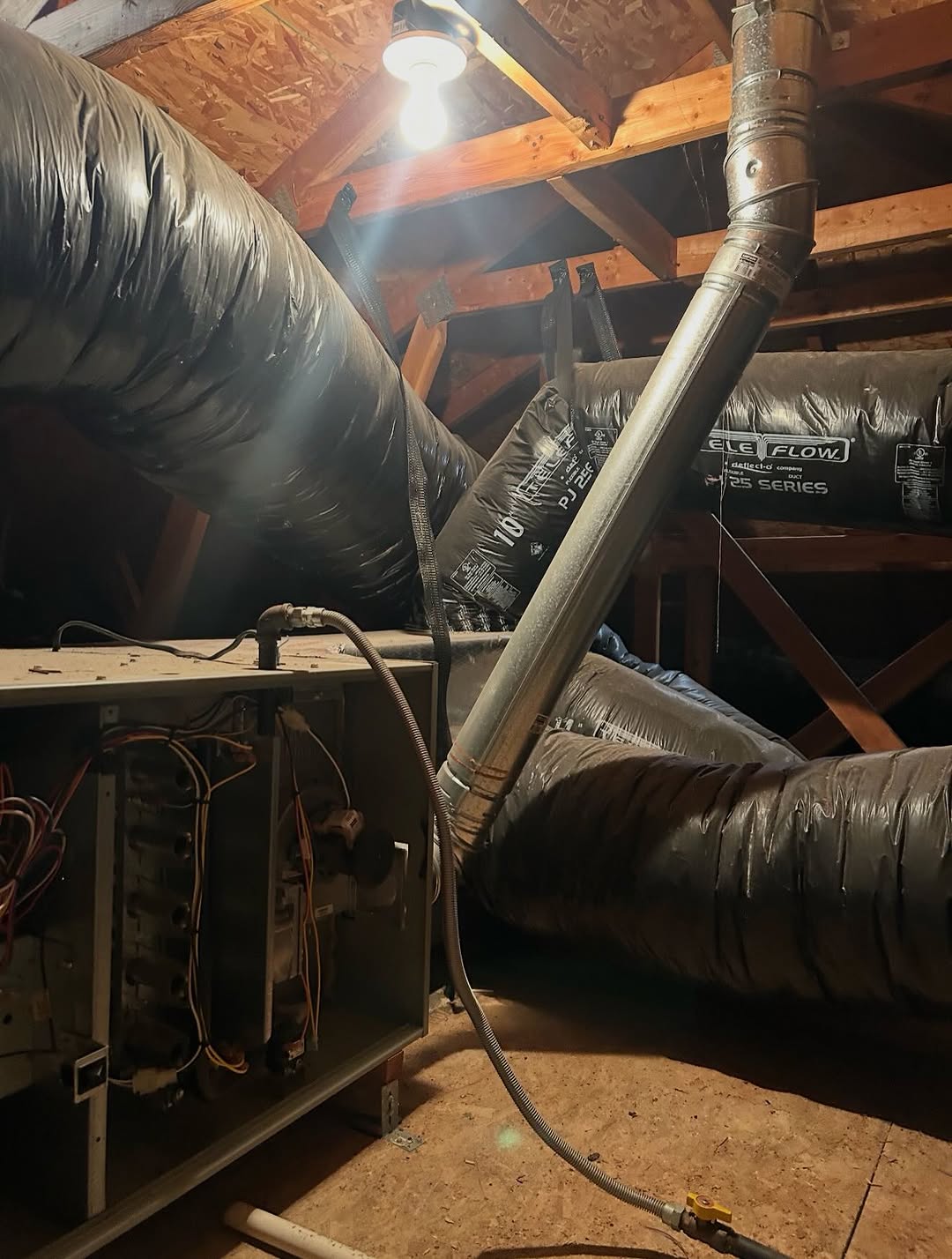
Once the install steps are out of the way, the next thing most homeowners want to know is simple: what will this cost, and how much help is out there?
The short answer is that total project cost usually comes down to three big things: system size, duct condition, and electrical work. That last part can sneak up on people. A home with solid ducts and enough panel space is one story. A home that needs duct replacement and a panel upgrade is a different ballgame.
Main Cost Factors for a Carlsbad Heat Pump Conversion
Here’s where the money usually goes:
| Component | Estimated Cost Range (USD) |
|---|---|
| Outdoor Heat Pump Unit | $2,500 – $5,000 |
| Indoor Air Handler / Coil | $1,500 – $3,500 |
| Labor (2–3 day installation) | $2,500 – $5,500 |
| Electrical Work (Breaker/Disconnect) | $400 – $1,500 |
| Electrical Panel Upgrade (if needed) | $1,500 – $4,000 |
| Ductwork Replacement (if needed) | $2,000 – $6,000 |
| Other costs (thermostat, permits, disposal) | $500 – $1,100 |
The biggest swings usually come from duct repairs and panel upgrades. If both are on the table, costs can move toward the top end fast. If your ducts are in decent shape and the electrical panel has room, the project is often much easier to stomach.
In Carlsbad’s mild climate, 16 SEER2 tends to hit the sweet spot for cost and efficiency. Going above 16 SEER2 usually doesn’t pay back enough to make the higher upfront spend worth it.
California Rebates and Incentives That Can Lower Project Cost
For 2026 installs, one thing is off the board: the federal 25C tax credit expired for systems installed after December 31, 2025, so it does not apply to 2026 projects.
That means state and utility programs do most of the heavy lifting.
TECH Clean California and SDG&E equipment rebates can be stacked.
| Program | Typical Value |
|---|---|
| TECH Clean California (income-tiered) | $1,000 – $6,000 |
| SDG&E Equipment Rebate | $200 – $500 |
| Golden State Rebates | $200 – $500 |
| Federal home electrification rebates | Up to $14,000 |
| Federal 25C Tax Credit | $0 (Expired) |
Income level matters quite a bit here. Households under 60% of the Area Median Income (AMI) can qualify for the top TECH Clean California amounts, up to $6,000. Households under 80% AMI may qualify for $2,000 to $4,500.
Most programs also require a participating licensed contractor to handle the paperwork. And because program amounts and funding cycles can shift, it’s smart to check the current rules before you move ahead.
Side-by-Side Look at Costs, Savings, and Fit for Your Home
After rebates, the main comparison is upfront cost versus yearly operating cost.
For a typical Carlsbad home, the out-of-pocket cost after rebates is usually $6,000 to $11,000 for a heat pump. A gas furnace replacement usually lands around $3,200 to $5,700. So yes, the upfront gap is real. But that’s only part of the story.
For a typical 1,800-square-foot Carlsbad home, annual operating costs for a heat pump run about $610 to $940, compared with $700 to $1,100 for a gas furnace plus central AC. That works out to about $90 to $160 per year in savings.
If the home has solar, the math can look a lot better. Under NEM 3.0, annual savings can climb to $400 to $800 because the heat pump can use daytime solar output that might otherwise be sent back to the grid at low export rates.
Here’s the side-by-side view based on typical 2026 numbers:
| Factor | Gas Furnace | Heat Pump (Ducted) |
|---|---|---|
| Net Upfront Cost (after rebates) | $3,200 – $5,700 | $6,000 – $11,000 |
| Annual Operating Cost | $700 – $1,100 | $610 – $940 |
| Heating Efficiency | 80–96% AFUE | 250–350% COP |
| Lifespan | 15–25 years | 12–18 years inland; 10–13 years coastal |
| 15-Year Total Cost of Ownership | $7,700 – $13,200 | $9,750 – $17,000 |
Lifespan is a big piece of the puzzle too. Near the coast, outdoor units often last only 10 to 13 years because salt air wears down components faster. For homes within about five miles of the ocean, a salt-air-resistant coil coating can make sense.
In plain English, the numbers tend to work best when:
- Your AC is also 12 years old or older
- Your panel has enough capacity
- Your ducts are still in decent condition
If you’re swapping out an older AC and furnace at the same time, bundling the work into one project can cut labor by 15% to 25% compared with doing the jobs separately.
Conclusion: When a Gas-to-Heat-Pump Switch Makes Sense
After you look at costs, rebates, and whether the house is ready, the choice comes down to fit. Carlsbad’s mild climate makes heat pumps a strong match. But the best path still depends on the age of your equipment, the shape of your ductwork, and whether your electrical panel can take the added load.
A full conversion usually makes more sense when both your air conditioner and furnace are 12 years old or more, your ducts are in good shape, and your electrical panel can support the new system. If your gas furnace is still fairly new - about 5 to 8 years old or less - a dual-fuel setup may be the better move for now. In that setup, the heat pump does most of the heating, and the furnace steps in as backup.
For homes near the ocean, durability matters just as much as efficiency. If the home is within about five miles of the coast, use coastal-grade equipment with salt-air-resistant coatings to help slow corrosion. That upgrade usually adds about $200 to $400.
Next Steps for Homeowners Planning a Replacement
Before you sign off on anything, ask for:
- a Manual J load calculation
- duct leakage test results
- an electrical panel review
These checks help you avoid surprises after installation starts. You’ll also want to confirm TECH Clean California eligibility before work begins, since incentive amounts change by household income tier. Your contractor should take care of the rebate paperwork. Once those pieces are in place, it becomes much easier to decide between a full conversion and a dual-fuel setup.
FAQs
Do I need to replace my ductwork?
Usually, no.
If your home already has a furnace and air conditioner, the ductwork you have is often compatible with a central heat pump.
That said, some homes need a few changes. If the ducts are leaky, too small, or in rough shape, a technician should test the system and confirm whether it can handle the new setup.
If your home doesn't have ducts at all, a ductless mini-split may be a better fit.
Will my electrical panel need an upgrade?
Maybe. Your panel may need an upgrade if it can't handle the heat pump's added electrical load.
Heat pumps usually need dedicated wiring. That can mean a new or updated breaker, plus an outdoor disconnect.
If your panel is already full or close to it, a panel upgrade is often part of the install. For older homes, a 100-amp panel is sometimes upgraded to 200 amps.
Should I choose a full conversion or dual-fuel?
In Carlsbad, dual-fuel often makes a lot of sense if you already have a working, fairly new gas furnace. You can run the heat pump for most of your heating and for all of your cooling, then keep the furnace in place as backup for those rare extra-cold mornings.
A full conversion may be a less ideal move if your furnace is under 5 years old and still has plenty of life left. In that case, it helps to compare dual-fuel and full replacement based on your ductwork, electrical setup, and budget.