
A ductless mini split is usually the better cooling choice for a mobile or manufactured home because the house was never built to carry the ductwork a central system needs. Mini splits pair a small outdoor unit with one or more wall mounted indoor heads, so there is no attic run to build and no floor cavity to open up. That matters in Oceanside and Vista, where a lot of manufactured homes have a wall furnace, no cooling, and nowhere obvious to put either. This is one of the questions homeowners ask most often, so here is the full answer.
Here's the short version:
- The floor cavity under a manufactured home is too shallow for proper cooling duct, and the return air path is usually missing too.
- One outdoor unit can run several indoor heads, with separate control in each room instead of one thermostat for the whole house.
- Electrical comes first, because the panel has to support the new load and the outdoor unit needs its own dedicated circuit.
- A complete install includes a city permit and equipment warranty registration, not just hardware on a wall.
Why ducted central air rarely fits a manufactured home
Site built houses usually have an attic or a crawl space, which is where supply trunks, branch runs and a return path live. A manufactured home has neither in any usable form. What it has instead is a belly cavity, a shallow space between the floor and the bottom board, already occupied by insulation, plumbing and whatever duct the factory installed.
Trying to add cooling capacity through that cavity runs into two problems. The first is physical room. Cooling moves more air than heating does, and the duct sizes needed to do that properly do not fit in a space that shallow. The second problem is return air. A cooling system has to pull air back as fast as it pushes it out, and most manufactured homes were never laid out with a return path big enough for that. Without it, you get a system that runs hard, moves little air, and still leaves bedrooms warm.
You can sometimes force the issue with floor demolition and new chases, but at that point you are paying for construction work, not for comfort. This is the exact situation a ductless mini split system was built for.
What the equipment actually looks like
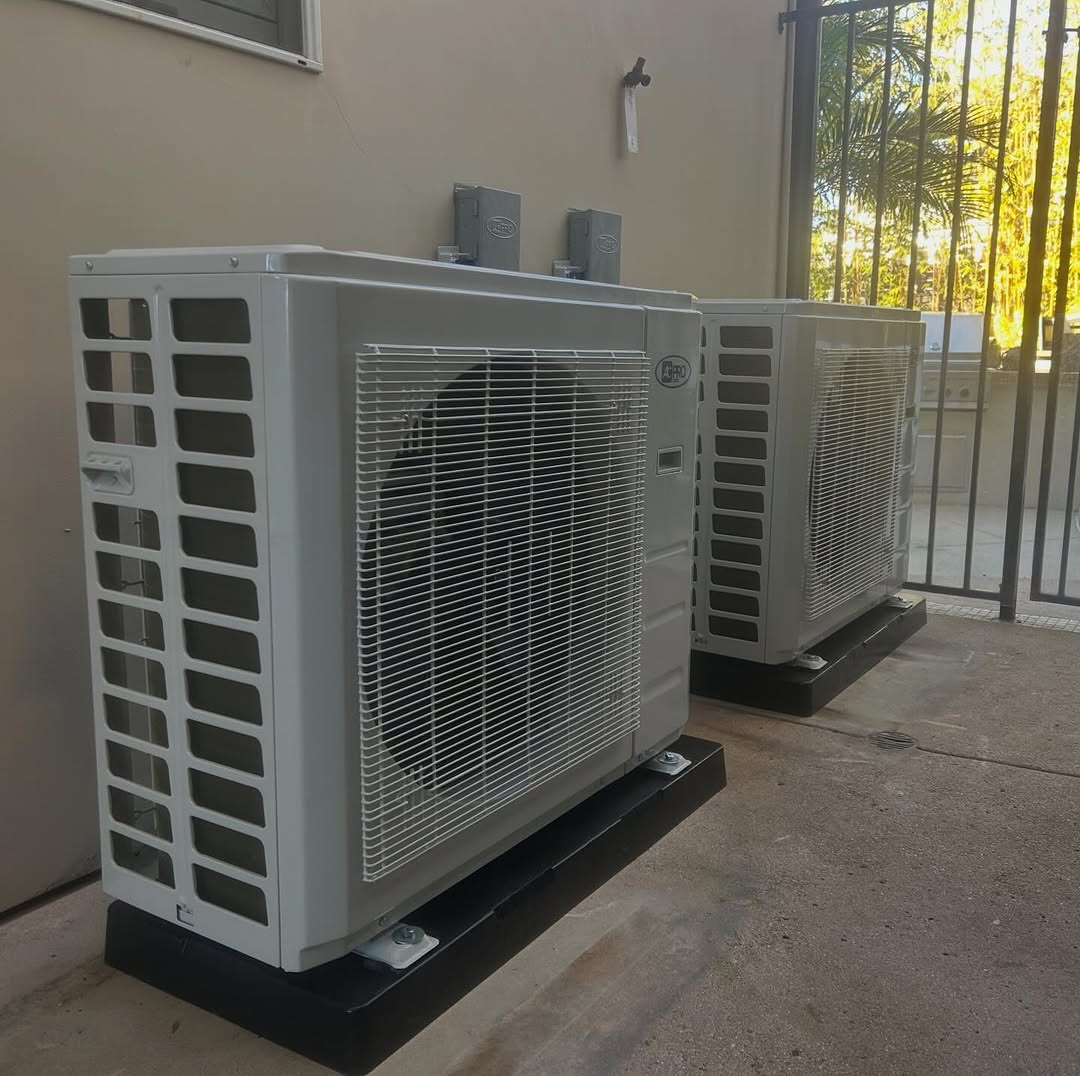
A small condenser sits outside on a pad or on brackets. From there a refrigerant line set, a condensate drain and a control wire run to each indoor head. The heads mount high on an interior wall, typically one in the living area and one in each bedroom you want conditioned. The wall penetration for the line set is small, which is a large part of why this approach works on a home with thin walls and no attic.
How a mini split gets laid out in a mobile home
The layout conversation is mostly about where people actually spend time. A single wide with a long hallway behaves differently than a double wide with bedrooms at both ends. Heads go where the load is, and because every head has its own control, a bedroom you only use at night does not have to run all afternoon.
Homeowners comparing this against a conventional system often find the room by room control is the part they end up valuing most. If you want to see the two approaches side by side in more detail, our guide to choosing between a mini-split and central AC walks through the tradeoffs for North County homes.
A wall mounted indoor head installed high on an interior wall, with the refrigerant line set routed out through a small wall penetration.
Heat, electrical and the parts people forget
Keeping the wall furnace
Plenty of manufactured homes in Oceanside and Vista run a wall furnace that still works fine. There is no requirement to tear it out. One common arrangement is to keep the wall furnace for heat and let the mini split handle cooling. The other is to let the mini split do both, since the same equipment reverses to heat, which is how heat pump systems work in general and why they suit San Diego's mild climate so well. Which path makes sense depends on the condition of the furnace and how you want to pay for heat.
The electrical panel
This is the step that quietly decides the project. Older manufactured homes often have a 100 amp panel, and the existing load has to be looked at before anyone orders equipment. The outdoor unit needs its own dedicated circuit with a disconnect, and there has to be space and capacity in the panel to give it one. Finding that out during the estimate is a planning conversation. Finding it out on install day is a problem.
Permit and warranty registration
A mini split install involves refrigerant work, a new electrical circuit and equipment mounted to the structure. A proper job includes pulling the city permit and registering the equipment with the manufacturer so the warranty is actually in force. Both of those should be handled by the contractor, not left on your to do list.
Ducted retrofit versus ductless, side by side
| Ducted retrofit | Ductless mini split | |
|---|---|---|
| Where the air travels | New duct in the shallow belly cavity | Refrigerant lines to wall mounted heads |
| Construction impact | Floor and skirting work to open the cavity | Small wall penetration per head |
| Return air | Needs a return path most homes do not have | Each head handles its own room |
| Temperature control | One thermostat for the whole home | Separate control per head |
| Heating | Depends on the furnace tied to the ducts | Can heat, or you keep the wall furnace |
| Typical fit for a manufactured home | Difficult and often impractical | Designed for exactly this case |
If your home does have usable ductwork and a working gas furnace, that changes the math, and add-on air conditioning becomes worth pricing instead. Part of a good estimate is figuring out which category your house falls into before anything gets quoted.
Working with Coastal Comfort San Diego
We are a family owned HVAC contractor based in Carlsbad, serving Oceanside, Vista, San Marcos and the rest of San Diego County, with 30+ years of HVAC experience behind the work. We install mini splits in mobile and manufactured homes, in condos and townhomes under HOA rules, and in ADUs and garage conversions. We pull the city permit, register the equipment warranty, and give you fair pricing without corporate markups. Estimates on new mini split systems are free, and we hold a 5.0 star rating on Google across 17 reviews.
Once the system is in, our Preventative Maintenance plan covers a spring visit and a fall visit each year, which matters more than usual on equipment living in coastal air. To get started, tell us about your mini split project or call (760) 893-6999. License 1149074, insured and bonded.
FAQs
Can you put mini splits in my mobile or manufactured home?
Yes, and it is usually the better option. A mini split skips the ductwork problem entirely by mounting a head in the living area and additional heads in the bedrooms you want conditioned. Nothing has to be cut into the floor cavity to make it work.
Do I have to give up my wall furnace?
No. Many homeowners keep the wall furnace for heat and use the mini split for cooling. The same mini split can also provide heat if you would rather consolidate, and we will walk through both options based on the condition of your existing furnace.
How many indoor heads can one outdoor unit run?
One outdoor unit can run several indoor heads, which is what makes this practical in a multi bedroom home. The right number depends on your floor plan and which rooms you actually want conditioned. Each head gets its own control, so you are not cooling empty bedrooms.
Will my electrical panel handle it?
That gets checked before any equipment is ordered. Older manufactured homes often have a smaller panel, and the outdoor unit needs a dedicated circuit with capacity and space available for it. If the panel will not support the system as designed, you will know during the estimate rather than on install day.
Do you handle the permit?
Yes. We pull the city permit for the install and register your equipment warranty with the manufacturer. Refrigerant work, a new dedicated circuit and equipment mounted to the structure all belong on a permitted job.