
What Causes Uneven Cooling Between Rooms
Uneven cooling usually comes down to three causes: poor airflow, extra room heat, or thermostat and equipment problems. Start by clearing blocked vents and checking the air filter - not lowering the thermostat again.
A room that heats up in afternoon sun may need better window shading or insulation. One that stays warmer with the door closed may lack a return-air path. If basic checks don’t help, an HVAC technician can test airflow, inspect ducts, and check system performance before recommending repairs or replacement. Regular filter checks and clear vents help keep cooling even afterward.
Uneven Room Cooling: What to Check First
Fixing Uneven Heating and Cooling in New Homes: Part 2
sbb-itb-a7630c3
How to Check for Uneven Cooling
Start with a few simple checks to help separate airflow problems from room heat gain and system issues.
Check Vents, Filters, and Airflow
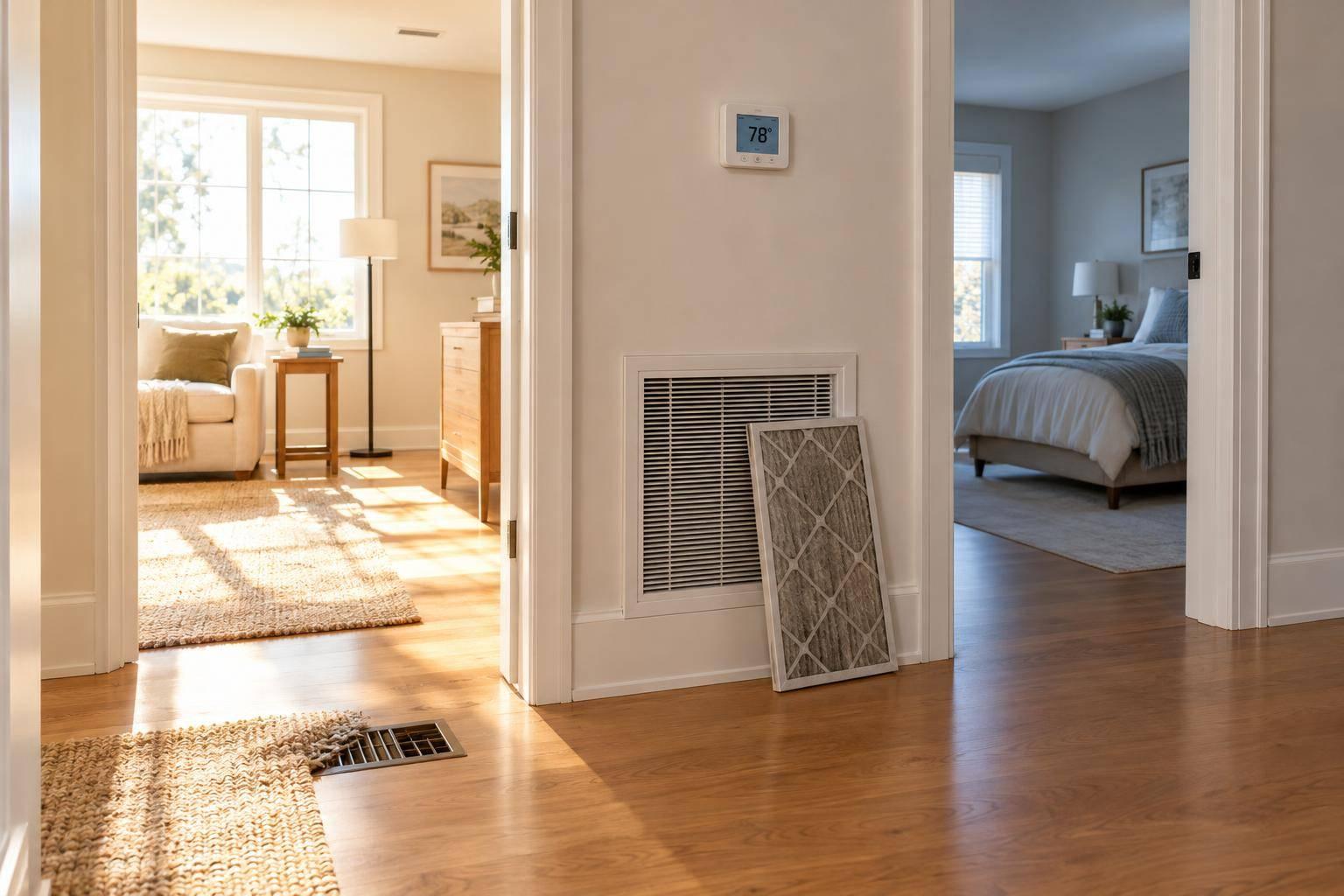
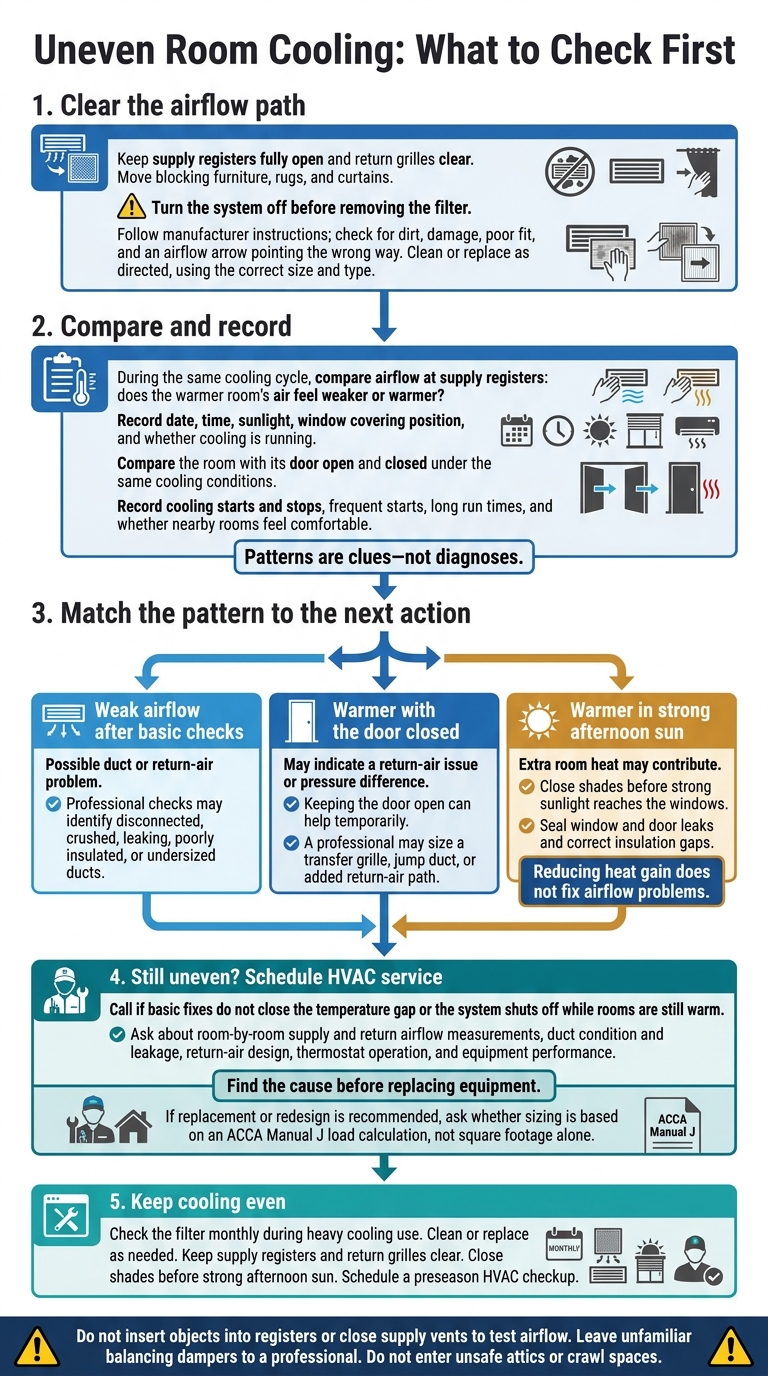
Check the warmer room’s supply registers and nearby return grilles. Move any furniture, rugs, curtains, or other items blocking them, and make sure the supply register is fully open. This rules out visible blockages - not problems hidden from view.
Turn the system off before removing the filter. Follow the manufacturer’s instructions to check for dirt, damage, a poor fit, or an airflow arrow pointing the wrong way. Clean or replace the filter as directed.
During the same cooling cycle, compare airflow at each supply register. Does the air in the warmer room feel weaker or warmer than in nearby rooms? That’s a clue, not a diagnosis.
Do not insert objects into registers or close supply vents to test airflow.
If airflow seems normal, track when the room gets warm.
Track Sunlight, Closed Doors, and Cooling Cycles
Uneven cooling may show up only at certain times. Record the date, time, sunlight, window covering position, and whether the cooling is running. Note whether the room stays warm all day or heats up only in strong afternoon sun - and whether it cools down after the sunlight moves away.
Compare the room with its door open and closed under the same cooling conditions. A room that gets warmer with the door closed may have a return-air issue or a pressure difference. Record that pattern.
Track when cooling starts and stops, whether the room stays warm afterward, and whether nearby rooms feel comfortable. Record frequent starts or long run times rather than treating the temperature gap alone as proof of a fault.
These notes can help you decide whether the problem calls for a basic airflow correction or professional HVAC repair.
How to Fix Uneven Cooling
Clear Airflow Blockages
Keep supply registers and return grilles open and free of obstructions. Replace a dirty filter with the correct type for your system - a more restrictive filter can limit airflow if the system can’t handle it.
Avoid closing supply registers, which can increase duct pressure. If your home has balancing dampers you don’t recognize, leave those adjustments to a professional.
Repair Ducts and Improve Return Airflow
If airflow is still weak after these checks, the ducts or return-air path are likely the problem. A professional can reconnect separated ducts, replace crushed sections, seal leaks with mastic or approved metal-backed tape, and insulate ducts in unconditioned spaces. Standard cloth duct tape won’t provide a durable repair. Undersized ducts may need changes, not just sealing.
Does the room cool better with the door open? Keep it open as a temporary way to improve return airflow. A lasting fix may require a transfer grille, jump duct, or added return-air path. Have a professional size the fix for the room.
Reduce Heat Gain and Review System Design
If airflow is corrected but the room still feels warm, focus on reducing heat gain. Close shades or blinds before strong sunlight reaches the windows. Seal window and door leaks with suitable caulk or weatherstripping, and have insulation gaps corrected. These steps reduce heat gain; they don’t fix airflow problems.
If uneven cooling persists, request a review of room cooling loads, duct sizing, return-air design, thermostat operation, and equipment performance. Find the cause before replacing equipment. Zoning can help rooms with different cooling loads, but it isn’t a workaround for duct leaks or restricted airflow.
When to Call for HVAC Service
Signs You Need Professional Help
Schedule service if basic fixes don’t close the temperature gap. That includes opening vents, replacing a dirty filter, and clearing obstructions. Also call if the system shuts off while rooms are still warm.
Have a professional check any visibly disconnected, crushed, poorly insulated, or damaged ducts. Don’t enter unsafe attics or crawl spaces to inspect them.
Before calling, note which rooms stay warm, when it happens, and whether airflow changed suddenly. Also note whether the problem started after remodeling, an addition, a thermostat replacement, or duct modifications. These details can help a professional narrow down a deeper issue.
What an HVAC Assessment Covers
An assessment may include room-by-room supply and return airflow measurements, duct inspections and leakage checks, and return-air checks. The technician may also review the thermostat’s location, blower and indoor coil operation, refrigerant charge where applicable, and the condition of filters and other accessible components. Static pressure may be checked, too.
Ask what the tests found and whether airflow was measured room by room. The proposed repair should address the cause - not just the symptom. Ask the technician to explain how it does that. If they recommend replacement or redesign, ask whether sizing is based on an ACCA Manual J load calculation rather than square footage alone.
How to Keep Cooling Even
Once your home cools evenly, routine maintenance and a few small habit changes can help keep it that way.
Check the filter monthly during heavy cooling use. Clean or replace it as needed, using the correct size and type.
Keep supply registers and return grilles clear of furniture, curtains, rugs, and storage. Leave room under interior doors for air to flow, and don’t close multiple registers to push air elsewhere.
Close shades before strong afternoon sun reaches the windows. Seal visible gaps, repair damaged ducts, and replace missing duct insulation promptly. Get professional help if access is unsafe.
Schedule a preseason HVAC checkup, and keep track of rooms that repeatedly feel hot between visits. Before an addition, renovation, or equipment installation, review window size, orientation, insulation, cooling needs, and return airflow so the system suits the updated layout.
FAQs
What temperature difference between rooms is normal?
There’s no universal standard, but a properly working HVAC system should keep temperatures consistent throughout your home. If some rooms stay much warmer or cooler than others, the cause could be leaky or incorrectly sized ductwork, too little insulation, heavy sun exposure, or an aging system.
If rooms regularly fail to reach the thermostat setting, have an HVAC professional check your system to find the cause.
Can a ceiling fan help a warm room?
A ceiling fan moves air, but it doesn’t lower the room’s temperature. If a room stays warm, poor HVAC airflow or a need for better zoning may be the cause.
For persistent uneven cooling, Coastal Comfort San Diego Heating and Air can help determine whether the problem comes from ductwork or cooling system efficiency. We’re an HVAC contractor based in Carlsbad, serving North County San Diego.
Would a smart thermostat help cool rooms evenly?
A smart thermostat controls when your system runs, but it usually can’t fix uneven cooling on its own. Leaky or incorrectly sized ducts, poor insulation, or a failing HVAC system may be behind those hot and cold spots.
Getting more consistent temperatures usually means fixing the root cause. That may involve checking whether your system is sized correctly, inspecting ducts for leaks, or using a zoned system to control temperatures in different areas of your home.